
Solar Mounting System Cost: What Determines Your Project Budget?
Struggling to create a reliable budget for your solar project because you can't seem to get a simple price-per-watt for the racking? This uncertainty makes comparing quotes feel like comparing apples to oranges, and you worry that a wrong choice could lead to major cost overruns. The key to accurate budgeting is understanding that the true solar mounting system cost is determined by project-specific details, not a generic industry average.
The final solar mounting system cost is a function of your specific project's engineering requirements, not a generic per-watt price. The most significant cost drivers are local environmental loads like wind and snow, the type of installation surface (roof or ground), the specifications of your solar modules, and factors that influence labor efficiency. The price you pay is for a complete, engineered bill of materials designed to keep your array safe for decades.
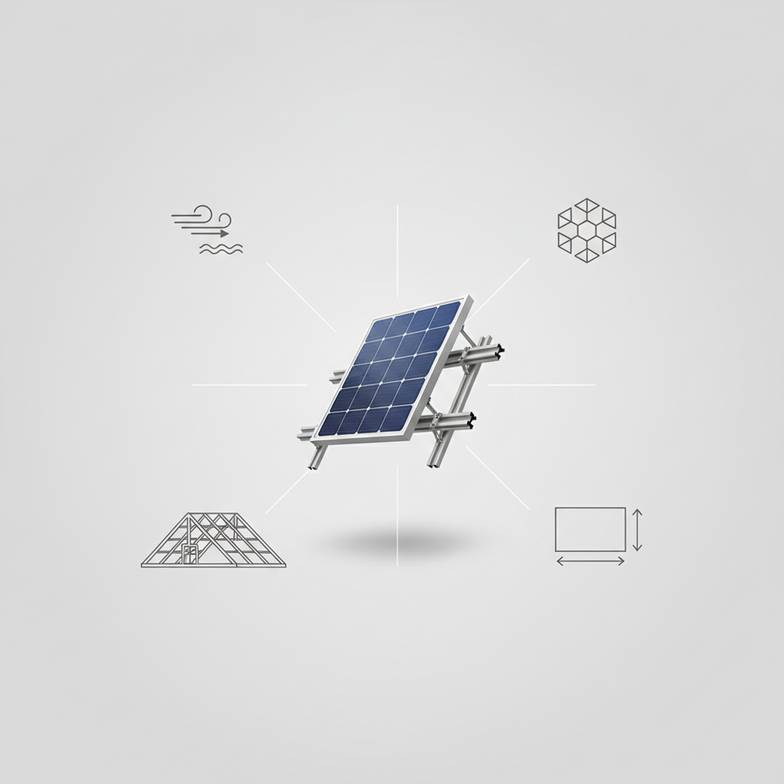
So, if a simple price-per-watt is off the table, how can you build a realistic budget? It's about shifting your perspective. Let’s dive into the specific variables that suppliers like us use to calculate your project's hardware quote. This will empower you to ask the right questions and evaluate your options with confidence.
Why Is There No Simple 'Price Per Watt' for a Solar Mounting System?
You just want a straightforward number to plug into your financial model, but every time you ask a supplier for a price, they respond with a list of questions. It can be frustrating and feel like they’re making things intentionally complicated, especially when you're just trying to get a preliminary budget together. However, a supplier asking for details is actually looking out for you, protecting your project from unnecessary risk.
A "price per watt" is misleading because it completely ignores the critical engineering variables that differ from one site to another. Two 100 kW projects can have vastly different hardware requirements and, therefore, a different solar mounting system cost. A responsible quotation is always based on a specific, engineered bill of materials tailored to the project.
From a Generic Inquiry to a Specific Bill of Materials
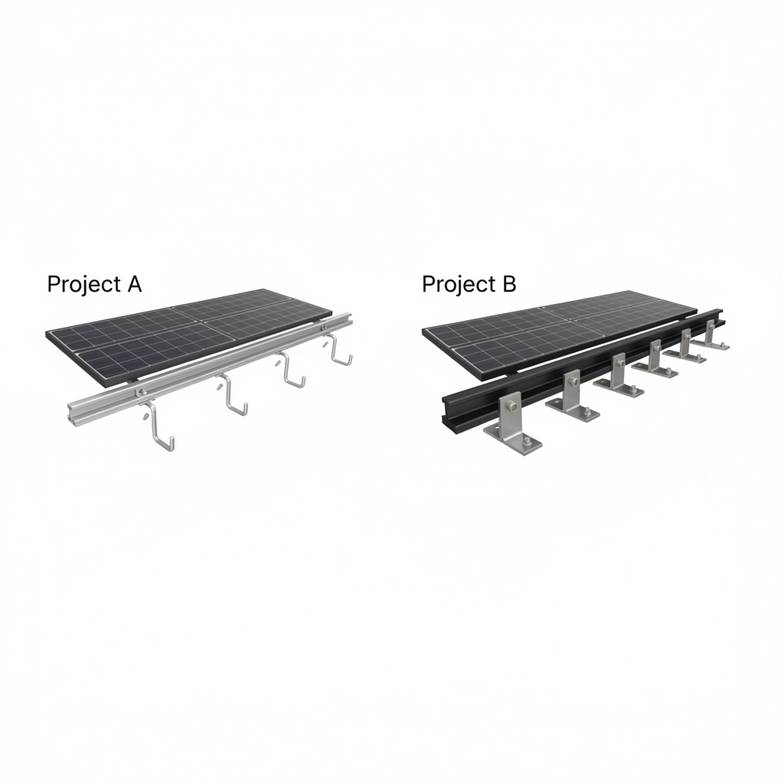
One of the most frequent questions we get is, "What's your price per watt for racking?" It's a logical starting point, but it doesn't account for reality. Let's imagine two hypothetical 100 kW commercial rooftop projects.
Project A is in a low-wind area with a simple, modern standing seam metal roof. The engineering might call for standard-duty rails and non-penetrating clamps attached every six feet. The bill of materials (BOM) is straightforward and uses standard components.
Project B is the exact same size but located in a coastal region with high wind-uplift requirements. The roof is an older, corrugated metal profile. The engineering for this project will likely demand heavy-duty rails, more frequent attachment points (perhaps every four feet), and specialized hardware to connect to the roof's structural purlins.
Even though both projects are 100 kW, Project B will require significantly more material—more attachments, more feet of rail, and potentially stronger components. This directly increases its material cost. Quoting both projects at the same "price per watt" would either dangerously under-engineer Project B or needlessly over-price Project A.
The Role of a Professional Supplier
As a supplier, our primary job isn't just to sell you a box of parts; it's to help you source the correct parts for a safe and durable installation. When we ask for information like the project address, the solar module datasheet, and layout drawings, we aren't trying to be difficult. We use that information to run preliminary calculations to determine:
Required rail strength and span: Based on the wind and snow loads at the site location.
Quantity and spacing of attachments: To ensure the system can resist uplift and shear forces.
The correct clamp type: To match the solar module's frame and respect its designated clamping zones.
A complete list of components: Including all necessary fasteners, bonding hardware, and accessories to avoid on-site shortages.
This process builds a quote from the ground up based on engineering principles. It prevents the nasty surprise of discovering you were under-quoted and need to issue a change order for more material halfway through the installation.
What Are the Primary Technical Factors Driving Solar Mounting System Cost?
You have a roof, and you have solar panels. It might seem like the hardware connecting them should be a simple commodity. But overlooking the technical details unique to your site can lead to a system that’s either dangerously under-designed or wastefully over-engineered. By understanding these core drivers, you can anticipate costs and provide the right information to suppliers from day one.
The main technical factors that determine your solar mounting system cost are environmental loads (wind, snow, seismic), the installation surface (roof type, ground conditions), and the specifications of your chosen solar module. These are non-negotiable inputs that dictate the type, quantity, and spacing of mounting components needed for long-term structural integrity.
Environmental Loads: The Biggest Variable
The physical forces your array must withstand are the single largest factor influencing your mounting system design. These are determined by your project's geographic location and are not up for negotiation.
Wind Load: A project in a hurricane-prone area like Florida must be designed to handle extreme wind uplift forces. In my experience reviewing project plans, this often means using heavier-gauge rails, reducing the span between attachments, and adding more connection points to the building structure. In some cases, wind deflectors are added to the array perimeter. All of these add material to the BOM and increase the cost.
Snow Load: In regions with heavy snowfall, like the mountains of Colorado or the Northeastern U.S., the mounting system has to support the immense weight of accumulated snow and ice. This typically requires shorter rail spans, which translates directly to more roof attachments and potentially more support rails, increasing both material and labor.
Seismic Activity: For projects in seismically active zones, the system must be designed to withstand ground motion. This can influence the foundation design for ground-mounted arrays or require more robust attachment methods for rooftop systems to ensure they remain secure during an earthquake.
The Installation Surface: Roofs and Ground
The surface you are mounting to has a huge impact on both material and labor costs.
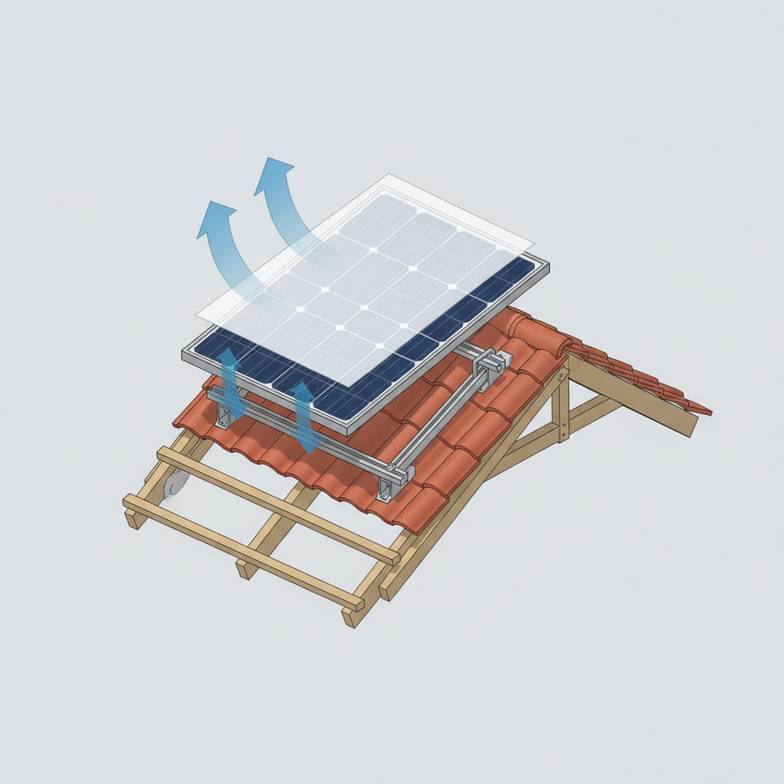
Roof Type: The cost can vary dramatically. A standing seam metal roof is often the simplest, allowing for non-penetrating clamps that attach directly to the seams. In contrast, a Spanish tile roof is one of the most complex. It requires installers to carefully remove tiles, install specialized hooks or flashed attachments to the structural deck, and then replace and seal the tiles. This complexity increases both material and labor costs significantly. For flat commercial roofs, a ballasted system might be used, where the cost is driven by the plastic ballast trays and the logistics of lifting tons of concrete blocks onto the roof.
Ground Conditions: For ground-mount systems, the foundation is a major cost center. A geotechnical report is essential here. If you have stable, easily-excavated soil, simple driven piles might be the most cost-effective solution. However, if the site has rocky soil, a high water table, or poor load-bearing capacity, you may need more expensive options like ground screws, helical piles, or even poured concrete footings.
Module Specifications
Finally, the solar panels themselves influence the racking design. It’s a common mistake to think all racking works with all modules. The module datasheet contains critical information, such as:
Dimensions and Weight: Larger and heavier modules change the structural load calculations for the entire system.
Frame Design and Clamping Zones: The manufacturer specifies exactly where on the frame the module can be clamped. The mounting rails must be positioned to align with these approved zones. Placing clamps outside these areas can create stress points on the glass and may void the module's warranty. A good mounting system design always respects these constraints.
How Do 'Hidden' Factors Impact Your Total Solar Mounting System Cost?
You've gathered a few quotes for your project, and one supplier's price for the hardware is significantly lower than the others. It’s incredibly tempting to sign the PO and lock in the savings. However, that low upfront price can be a Trojan horse, hiding massive downstream costs in labor, logistics, and project delays that can completely blow up your budget. Looking beyond the component price to the total installed cost is where you find the real value.
The total installed solar mounting system cost includes "hidden" factors that go far beyond the hardware price tag. These are labor efficiency, logistics and packaging, and supply chain reliability. A system with a low component price can easily become the most expensive one overall when these critical factors are properly accounted for.
Labor Efficiency: The Silent Budget Killer
On any solar project, labor is one of the largest and most variable expenses. I've seen installation teams get bogged down for days by poorly designed racking with too many small, loose parts. A system with 20% cheaper components that takes 30% longer to install is a net loss every time.
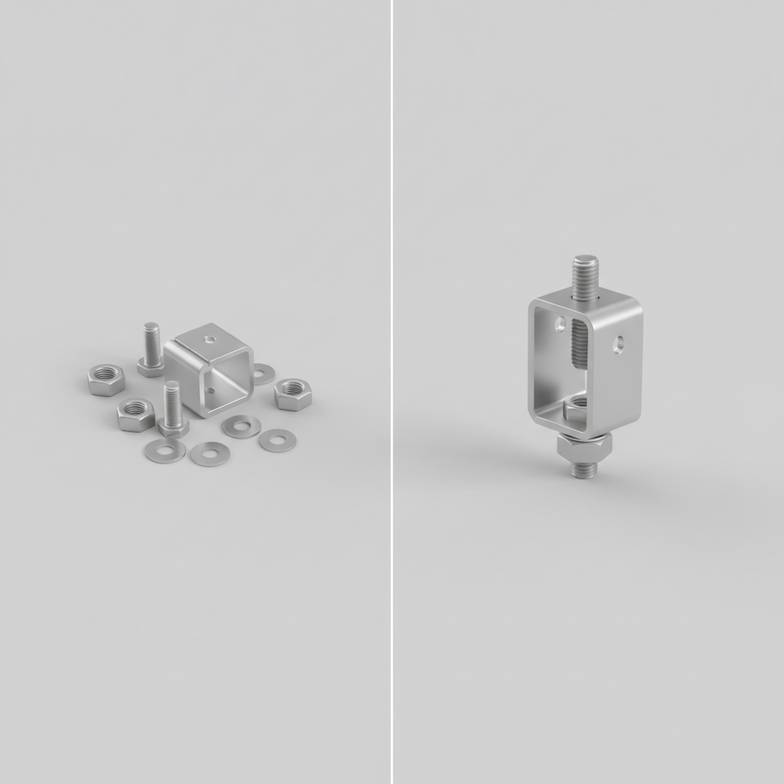
Pre-assembly is the key to labor savings. When evaluating a mounting system, look for features designed to make installers' lives easier. For example, a clamp that arrives pre-assembled and combines the mid-clamp with the bonding hardware into a single piece can save a minute or more per module compared to fumbling with a separate bolt, nut, clamp, and bonding washer on a hot, sloped roof. Those minutes add up to hours and days on a commercial-scale project.
Here's a simple comparison of how design features impact your bottom line:
| Feature | Low-Cost System (High Labor) | Efficient System (Low Labor) | Impact on Total Cost |
|---|---|---|---|
| Module Clamps | Multi-piece assembly (bolt, nut, clamp) | Pre-assembled, single-piece clamps | Faster installation, fewer dropped parts, less fatigue |
| System Bonding | Separate bonding jumpers or washers | UL 2703 listed integrated bonding | Eliminates an entire installation step and material |
| Rail Preparation | Requires field-drilling for attachments | Pre-punched or channel-based attachments | Reduces on-site labor, improves consistency |
Logistics, Packaging, and Kitting
A factor that procurement managers often overlook is how the material will arrive on site. A cheap quote doesn't mean much if the product arrives damaged, incomplete, or in a jumbled mess.
I've heard horror stories from installers who spent the first half-day of a project just sorting through a giant crate of mixed-up nuts, bolts, and clamps. A good supplier thinks about the on-site experience. Are the rails bundled securely? Are small components like fasteners and clamps boxed, labeled, and kitted per array or section? This level of organization prevents chaos and keeps the installation team productive from the moment they unload the truck. Ask your potential suppliers about their packaging and kitting options—it can be a significant hidden value.
The Ultimate Hidden Cost: System Failure
This is the one cost you can't afford. An under-engineered mounting system that was chosen because it had the lowest upfront price can fail during a major storm or under heavy snow. The cost of such a failure isn't just the repair; it's the lost energy production, potential roof damage, and catastrophic harm to your company's finances and reputation.
This is precisely why we, as a supplier, insist on getting the right project data before providing a quote. We are your first line of defense in risk management. The slight premium you might pay for a properly engineered system from a reputable supplier is the cheapest and most effective insurance policy you can buy for your solar asset.
Frequently Asked Questions
How can I get an accurate solar mounting system cost estimate?
To get an accurate estimate, prepare a complete Request for Quotation (RFQ). This should include the full project address (for load calculations), a site plan or roof layout, the specific solar module datasheet, and the desired array size. The more detail you provide, the more accurate your supplier's quote will be.
Is an aluminum or galvanized steel system cheaper?
Galvanized steel often has a lower upfront material cost per pound, making it a common choice for large ground-mounts. However, aluminum is much lighter (reducing shipping costs and roof load) and offers superior natural corrosion resistance. The "cheaper" option truly depends on the project's engineering, location, and total installed cost, which includes labor and long-term durability.
Does using pre-assembled components really save money?
Yes, in almost all cases. While components with pre-assembled parts might have a slightly higher piece price, they can dramatically reduce on-site labor hours. For commercial projects where labor is a significant budget item, this reduction in installation time almost always leads to a lower total installed cost.
Do I need a structural engineering report for my mounting system?
Absolutely. While a supplier like us can provide a preliminary design and a comprehensive bill of materials based on your inputs, a final, stamped structural engineering report from a licensed professional engineer is critical. It's typically required to get a permit and is essential for ensuring the safety, compliance, and long-term viability of your installation.
Conclusion
To truly understand your project budget, it's time to stop asking for a generic price-per-watt. The real solar mounting system cost is a detailed calculation based on your project's unique circumstances. The final price on your quotation is a direct reflection of the engineering required to manage your site's specific wind and snow loads, your roof or ground conditions, and the modules you've selected. Remember that the cheapest components can easily lead to the most expensive project once you factor in the hidden costs of labor, logistics, and risk. By focusing on the total installed cost and providing suppliers with complete information, you can make an informed decision that ensures the safety and profitability of your solar asset for decades.
Ready to get a realistic budget for your next project? Submit your project details to our team. We'll help you develop a comprehensive bill of materials based on your specific requirements and provide a transparent quotation to help you plan effectively.
For further project planning, read our guides to comparing solar mounting quotes and avoiding solar installation mistakes.
Written by
XINVOK Technical Team
Practical solar mounting knowledge for EPC teams, distributors and project buyers.
Project inquiry
Talk to Our Team
Share your project location, module size, mounting type, quantity and customization requirements.