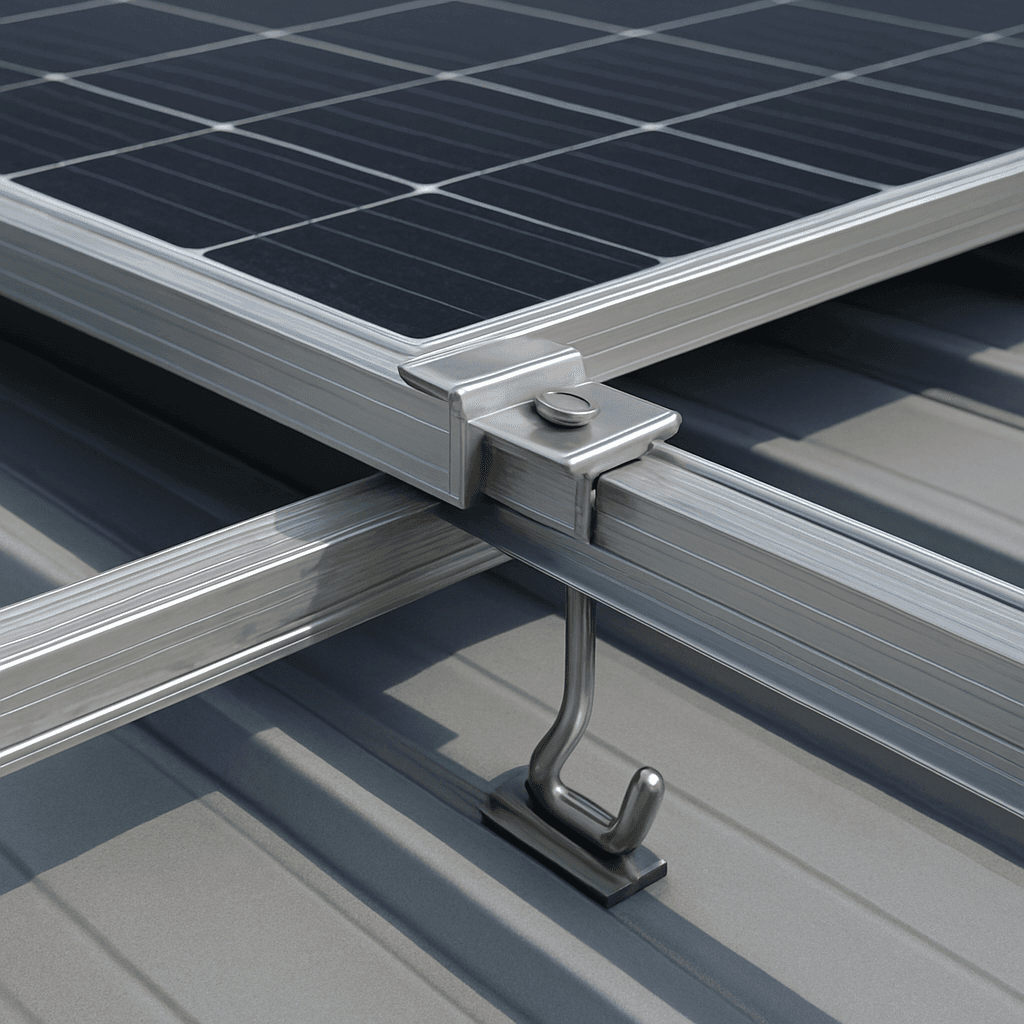
Metal Roof Solar Mounting: Standing Seam vs. Trapezoidal Roof Systems
Finding the right solar mounting solution for a metal roof can feel complicated. You're trying to build a secure, long-lasting solar array, but you’re worried that one wrong choice could lead to costly roof damage or leaks down the road. The truth is, the best metal roof solar mounting system isn't about finding a single "best" product, but about correctly matching the hardware to your specific roof profile and project goals.
The fundamental difference between standing seam and trapezoidal metal roof solar mounting lies in penetration. Standing seam systems use non-penetrative clamps that grip the roof's raised seams, preserving the roof's warranty and waterproof seal. Trapezoidal systems use brackets that are fastened through the roof sheet into the structure below, relying on high-quality gaskets and fasteners to create a waterproof seal at each attachment point.
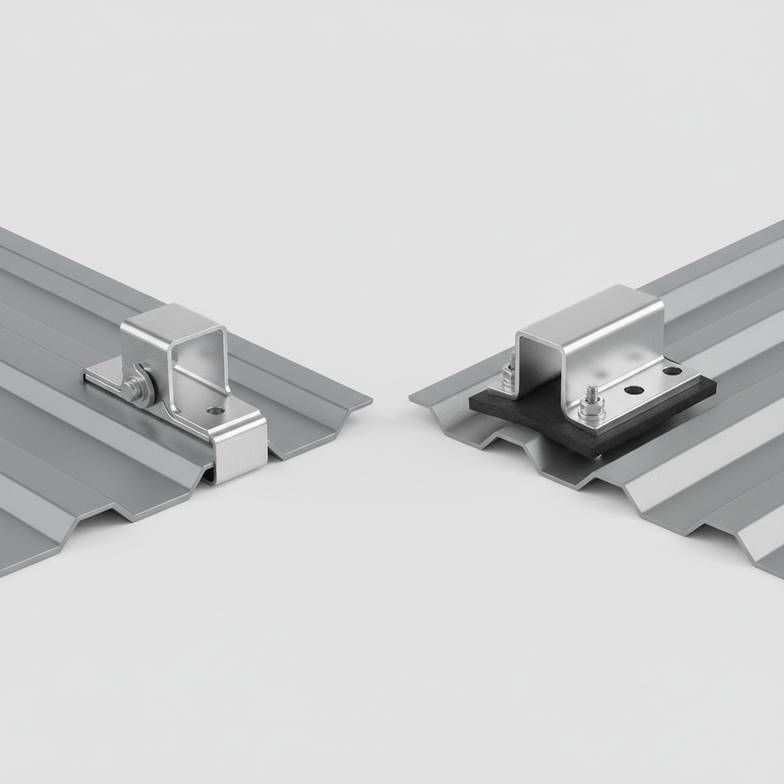
Now that you understand the core distinction, let's get into the practical details. The choice you make has real consequences for installation time, long-term risk, and overall project cost. As a supplier, I've seen firsthand how a little bit of knowledge upfront can prevent major headaches later.
What Makes Standing Seam Metal Roof Solar Mounting Unique?
You’ve got a project with a premium standing seam roof, and the owner is (rightfully) concerned about protecting their investment. The idea of drilling hundreds of holes into a perfectly good roof is a non-starter. So, how do you mount a solar array securely without compromising the roof's integrity?
The solution is in the specific design of standing seam clamps. These systems use specialized clamps that attach directly to the raised vertical seams of the roof panels. They secure themselves with set screws that apply pressure from the side, gripping the seam firmly without ever piercing the metal surface. This keeps the roof's water-shedding channel completely intact.
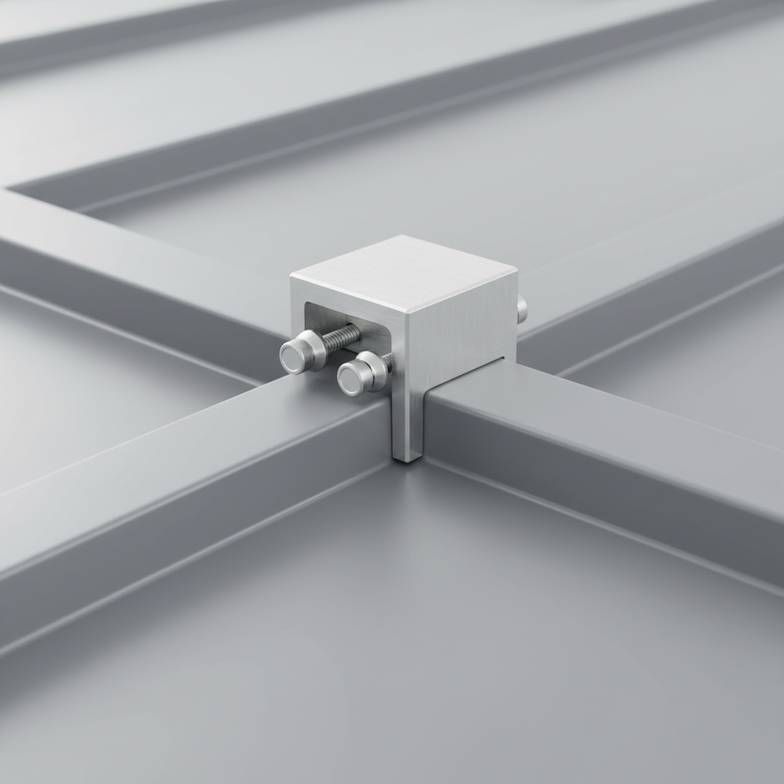
The Non-Penetrative Advantage: Protecting the Roof Warranty
The biggest selling point here is risk mitigation. Standing seam roofs are a significant architectural investment, chosen for their longevity and superior weather resistance. Almost every manufacturer's warranty for these roofs will be voided the moment you drill a hole through a panel.
A frequent question we get from project developers is, "How can we give our client peace of mind?" Using non-penetrative clamps is the answer. By avoiding penetrations entirely, you:
Preserve the roof warranty: This is a major value proposition for the building owner.
Eliminate the risk of leaks: Since there are no holes, there are no potential entry points for water created by the solar installation.
Maintain the roof's structural integrity: The system works with the roof's design, not against it.
In my experience, for projects on high-end commercial buildings, architectural homes, or facilities where roof integrity is paramount (like data centers or cold storage), a non-penetrative standing seam system is almost always the required choice.
Compatibility is Everything
Here's the most critical part that people often overlook: standing seam clamps are not universal. They are designed to fit specific seam profiles. Forcing the wrong clamp onto an incompatible seam is a recipe for disaster—it can damage the seam, fail to achieve proper grip strength, or both.
Before you can even get a quote, you need to identify the exact roof profile. Here’s what we ask our customers to verify:
Seam Type: Is it a double-lock seam, a snap-lock, a bulb seam, or another variation? Some profiles, like certain snap-lock types with integrated nail flanges, are not compatible with clamps at all.
Seam Dimensions: You need the precise height and width (at the top) of the seam. A clamp designed for a 0.5-inch seam won't work on a 1-inch seam.
Roof Material and Gauge: The thickness of the metal (e.g., 24-gauge steel vs. 0.040" aluminum) affects how the set screws engage with the material.
To de-risk your procurement, you should always provide your supplier with the roof panel manufacturer's cut sheet or take detailed measurements and photos of the seam itself. We then match this information to the technical drawings of our available clamps to confirm a perfect fit.
Installation and Torque Specifications
While non-penetrative, installation isn't just a matter of tightening a bolt. The set screws on each clamp must be tightened to a specific torque value using a calibrated torque wrench.
| Task | Critical Detail | Why It Matters |
|---|---|---|
| Clamp Placement | Position clamps according to the structural layout plan. | Ensures loads are distributed correctly across the roof structure. |
| Set Screw Tightening | Use a calibrated torque wrench to tighten to the manufacturer's specification (e.g., 16-18 N·m). | Under-tightening leads to a weak connection; over-tightening can crush or damage the seam, compromising its integrity. |
| Rail Attachment | Secure the solar mounting rail to the clamp's integrated bolt or channel. | This final connection transfers all wind and snow loads from the array to the clamps and, ultimately, to the roof structure. |
We always provide these torque specs with our clamps. A professional installer understands that hitting these numbers is non-negotiable for ensuring the array will withstand wind uplift forces for the next 25+ years.
How Does Metal Roof Solar Mounting Work on a Trapezoidal Profile?
Now let's talk about the most common type of metal roof you'll encounter: trapezoidal or corrugated. These roofs are everywhere—on warehouses, agricultural buildings, and commercial facilities. You know you'll have to make penetrations, and your main concern is how to do it without creating a long-term leak liability.
For this type of metal roof solar mounting, the approach is completely different. The system uses mounting feet or brackets that are fastened directly through the high point, or "crest," of the trapezoidal profile. Each bracket is secured with specialized self-tapping or self-drilling screws that anchor into the purlins or structure below.
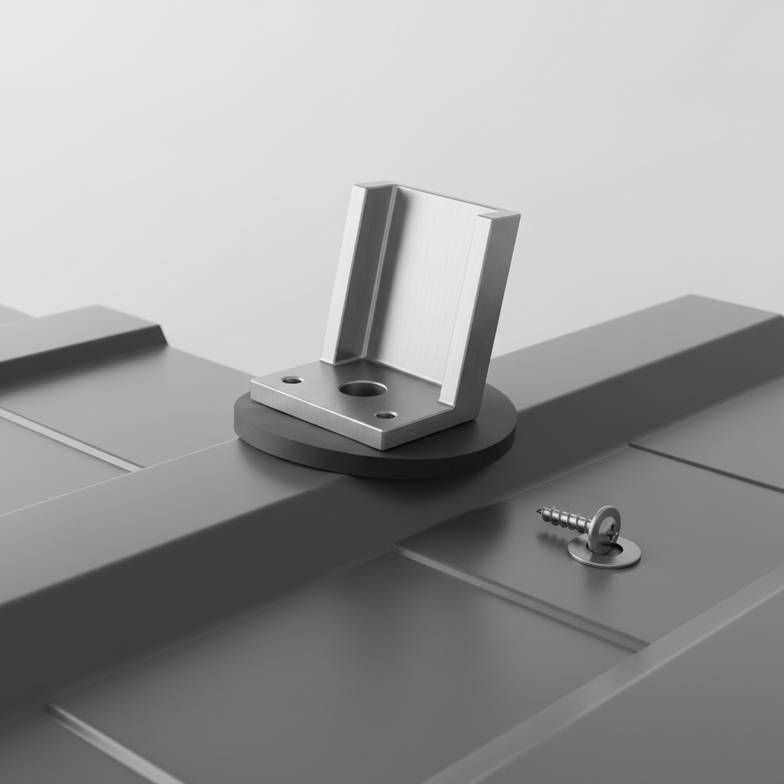
The secret to a successful installation isn't avoiding penetration—it's mastering it. A high-quality EPDM (ethylene propylene diene monomer) rubber gasket sits between the metal bracket and the roof sheet. When the fastener is tightened correctly, this gasket compresses to create a durable, watertight, and long-lasting seal.
The Art of the Perfect Seal
When a customer asks me what separates a reliable trapezoidal mounting kit from a cheap one, I always point to the components responsible for the seal. It’s a system of three parts working together.
The Mounting Bracket: The base of the bracket must be shaped to fit the trapezoidal profile of the roof. Some brackets are designed for specific profiles, while others are more universal. They are typically made from high-grade aluminum to prevent corrosion. Attached to these brackets, you can either use traditional long rails or a "rail-less" or "mini-rail" system.
The EPDM Gasket: This is arguably the most important component. EPDM is a synthetic rubber chosen for its exceptional resistance to UV radiation, extreme temperatures, and ozone. A thick, high-quality EPDM gasket will remain flexible and maintain its seal for decades. In my experience, this is where low-cost suppliers often cut corners, using inferior materials that will dry out and crack in just a few years, leading to inevitable leaks.
The Fasteners: You can't just use any screw from the hardware store. The fasteners must be specifically designed for this application. They typically feature a special corrosion-resistant coating and are often paired with their own sealing washer for a second layer of protection. They must be long enough to get a solid bite into the underlying structure (usually wood or steel purlins).
Managing Installation Quality and Risk
With a penetrative system, installation quality is everything. While the components are straightforward, the technique matters immensely. I always tell our installation partners that a bit of extra care during installation saves them from expensive callbacks later.
Here are the key quality control points for a trapezoidal metal roof solar mounting installation:
Correct Placement: Brackets must be installed on the crest (high point) of the corrugation, never in the valley where water flows. They also must be aligned with the underlying purlins or rafters to ensure a strong structural connection.
Proper Fastener Driving: The installer must use a drill with a depth-stop or an impact driver with a sensitive touch. If the screw is over-tightened, it can crush the EPDM gasket and dimple the roof sheet, creating a place for water to pool. If it's under-tightened, the gasket won't compress enough to create a seal.
Sealant Application (Optional but Recommended): For an extra layer of security, many best practices call for applying a high-quality, UV-stable sealant compatible with the metal roof coating around the penetration point before the bracket is placed.
What customers often overlook is this difference in risk profile. With a standing seam roof, the risk is upfront in component selection—choosing the right clamp. With a trapezoidal roof, the risk is in the installation process—executing hundreds of perfect seals.
Frequently Asked Questions
Can I use standing seam clamps on a trapezoidal roof?
No, absolutely not. Standing seam clamps are engineered to grip a very specific, vertically oriented seam profile. They have no way to securely attach to the angled or rounded profile of a trapezoidal or corrugated roof panel. Attempting to do so would result in a completely unsafe installation.
How long do the EPDM gaskets on trapezoidal mounts last?
A high-quality EPDM gasket from a reputable supplier is designed to last for more than 25 years. The material is incredibly stable and resistant to the elements. However, buyers should always ask for the technical data sheet for the gasket material to verify its specifications and projected lifespan.
Does metal roof solar mounting cause leaks?
When installed correctly with high-quality components, metal roof solar mounting does not cause leaks. Leaks are almost always the result of installer error (e.g., improper torque, mounting in valleys) or the use of low-quality components like inferior gaskets or uncoated fasteners that rust.
What information do I need to provide for an accurate mounting quote?
To get a fast and accurate proposal, you should provide your supplier with: the roof type and its exact profile/seam dimensions, a roof layout drawing, the project site address (for wind/snow load calculations), and the datasheet for the solar modules you plan to use.
Conclusion
So, which system is better? As you can see, that's the wrong question. The choice between standing seam and trapezoidal metal roof solar mounting is determined by the roof you are working with. If you have a standing seam roof, a non-penetrative clamp system is the clear choice to protect the roof's warranty and integrity. If you have a more common trapezoidal or corrugated metal roof, a well-designed penetrative system with high-quality gaskets and proper installation is the reliable and cost-effective path forward. The key is to understand the specific risks and requirements of each system and to partner with a supplier who can provide the right components for your project.
Ready to find the right solution for your project? Send us your roof details, module specifications, and layout drawings. Our team at XINVOK will help you configure a reliable and compatible metal roof solar mounting system and provide a detailed quotation to get your project moving.
For further project planning, read our guides to standing seam clamp compatibility and avoiding solar installation mistakes.
Written by
XINVOK Technical Team
Practical solar mounting knowledge for EPC teams, distributors and project buyers.
Project inquiry
Talk to Our Team
Share your project location, module size, mounting type, quantity and customization requirements.