How to Compare Solar Mounting System Quotes Beyond Price per Watt
You’ve got a stack of proposals on your desk, and you're trying to compare solar mounting system quotes from a few different suppliers. The problem? One quote is significantly cheaper per watt, and it’s tempting to just go with that one. But something feels off, and you're worried that a price that low might hide bigger problems that will show up during installation or, worse, years down the road. Choosing the right system isn't just about saving money today; it's about ensuring the long-term safety and performance of your entire solar project.
To compare solar mounting system quotes effectively, you must look beyond the price per watt and evaluate the total installed cost. This means scrutinizing the bill of materials for completeness, verifying the quality of the materials and coatings specified, assessing the engineering documentation provided, and factoring in the labor costs associated with the system’s design. A cheap quote on paper can quickly become expensive if it requires more installation time or lacks critical components.

That simple answer is the foundation, but the devil is truly in the details. A quote is more than just a number; it's a reflection of the supplier's quality, engineering rigor, and understanding of your project's needs. Let's break down exactly what you should be looking for to make a smart, risk-free decision.
Why Is Price Per Watt a Deceptive Metric for Solar Mounting System Quotes?
It’s so easy to create a spreadsheet, plug in the "price per watt" from each supplier, and pick the lowest number. But relying solely on this metric for racking is one of the biggest mistakes I see procurement managers make. This number can easily be manipulated and often hides what really matters.
Price per watt is a deceptive benchmark because it completely ignores material quality, component completeness, and the engineering that ensures the system's long-term safety. A surprisingly low price is often a red flag for missing parts, inferior alloys, or a design that hasn't been properly validated for your project's specific wind and snow loads.
Dive Deeper: The Hidden Costs Behind a "Low Price"
From my experience reviewing hundreds of project plans, the most overlooked details are often the ones that create the biggest headaches. A low price per watt can be a sign that a supplier has cut corners in areas that aren't immediately obvious.
Material Grade and Finish Matter
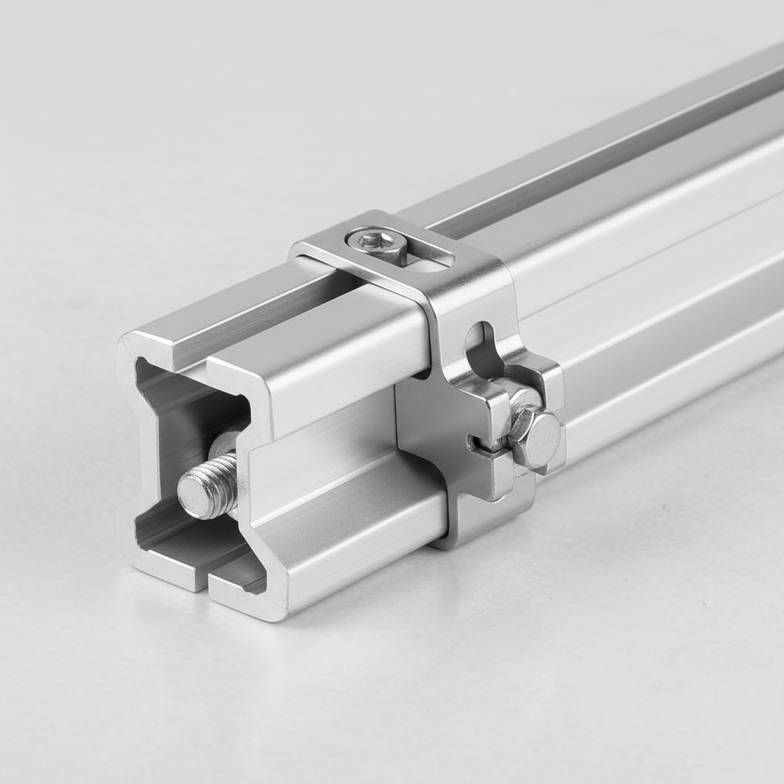
Not all aluminum is created equal. A professional quote will specify the exact grade, like Aluminum Alloy 6005-T5. This is a structural alloy with high tensile strength, perfect for load-bearing components like mounting rails. Some cheaper quotes may use lower-grade aluminum, like 6063, or even recycled aluminum with inconsistent properties. These materials might look similar, but they won't perform the same under stress over 25 years.
The same goes for coatings. Look for a specified anodization thickness, typically 10-13 microns, which provides a protective layer against corrosion. A thinner coating saves the manufacturer money but leaves your system vulnerable to rust and degradation, especially in coastal or industrial areas. The fasteners are just as critical. A quote should specify Stainless Steel SUS304 for bolts and nuts, which offers excellent corrosion resistance. Cheaper galvanized steel fasteners might not last, leading to costly repairs.
The Incomplete Bill of Materials (BOM)
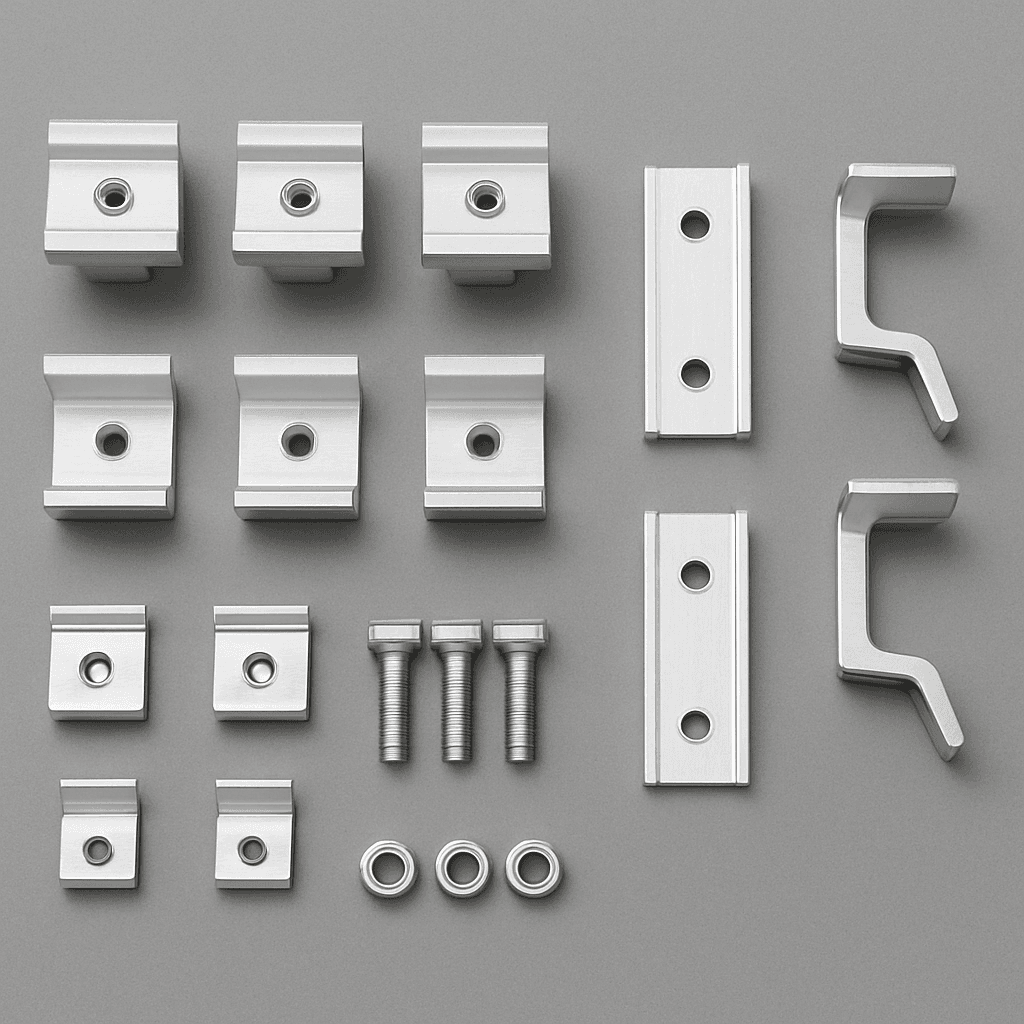
A common trap we see buyers fall into is receiving a system that's missing parts. A low price per watt might be achieved by simply not including everything you need. When you compare quotes, you must compare the Bill of Materials (BOM) line by line.
Does the quote include:
All necessary clamps? (Both mid clamps and end clamps)
Grounding components? (Grounding lugs and clips are essential for safety)
All fasteners? (Every single nut, bolt, and screw)
Roof-specific attachments? (The correct roof hooks, standing seam clamps, or flashing for your roof type)
A few missing grounding lugs or a shortage of clamps can halt an installation and send your team scrambling, causing expensive delays that wipe out any initial savings.
Hidden Assumptions in the Design
Finally, a supplier might achieve a low price by using less material—thinner rails, fewer roof attachments, or wider spacing between supports. They might justify this by making unsafe assumptions about your project's conditions, like assuming it's in a low-wind and no-snow area.
A trustworthy quote is based on the specific requirements of your project location. Always provide your supplier with the project address so they can use the correct wind, snow, and seismic loads in their calculations. A design that isn't engineered for your site is not a bargain; it's a liability.
How Do You Calculate the True "Total Installed Cost"?
Your budget is tight, and the cheaper quote seems like the responsible choice for your bottom line. But what if that system, with its hundreds of tiny, separate parts, takes your installation crew twice as long to assemble on the roof? Labor is one of the biggest expenses in a solar project, and it can quickly erase any savings from a cheap materials quote.
The true cost of a mounting system is its total installed cost. This includes the price of the materials plus all associated labor costs, potential project delays, and any future maintenance expenses. A system with clever design features like pre-assembled components often has a lower total installed cost than a "cheaper" kit that comes as a bag of loose parts.
Dive Deeper: Uncovering Labor and Long-Term Expenses
When we prepare a proposal, we're not just thinking about the parts in the box. We're thinking about the installer on the roof. How can we make their job faster, safer, and easier? That mindset is what separates a good system from a cheap one.
Component Assembly: Pre-Assembled vs. Bag of Parts
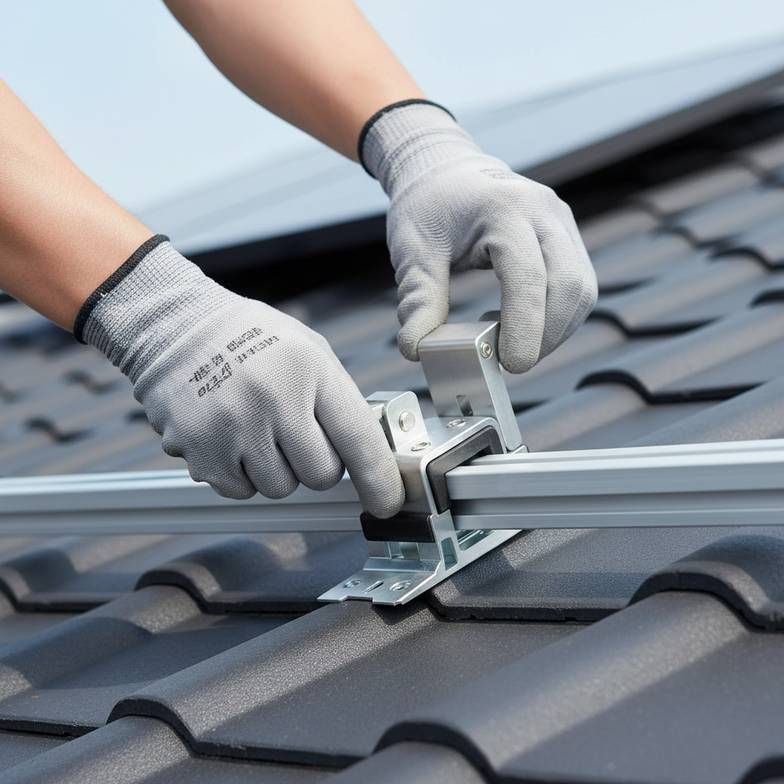
This is where you can find significant hidden costs. Consider a module clamp. A low-cost system might give you a bag with a clamp body, a bolt, a spring nut, and a washer. The installer has to fumble with these four tiny pieces for every single clamp, often with gloves on, high up on a roof.
A system designed for efficiency, on the other hand, will provide a pre-assembled clamp. The bolt and nut are already attached and ready to be tightened. It seems like a small detail, but let's do the math. If a pre-assembled clamp saves just 30 seconds per module, and you're installing a 500-module array, that's over four hours of saved labor for one small component. Now apply that logic to every part of the system. These hours add up fast.
Here's a quick comparison:
| Feature | Low-Cost "Kit" System | Efficiency-Focused System |
|---|---|---|
| Clamps | Loose bolt, nut, clamp body | Pre-assembled clamp unit |
| Rail Splicing | Separate splice bar, multiple bolts | Integrated, tool-free splice |
| Labor Time | High; requires extensive on-site assembly | Low; components are ready to install |
| Risk of Dropped Parts | High | Low |
Installation Manuals and Support
Time is also lost when instructions are unclear. A great supplier will provide a detailed, clear, and well-illustrated installation manual. A bad one sends you a one-page diagram that's hard to understand. When installers have to stop and guess what to do next, the project schedule slips. Before you buy, ask for a copy of the installation manual. If it’s confusing or incomplete, expect your installation to be slow and frustrating.
Long-Term Maintenance Costs
The total cost doesn't end when the installation is complete. A system built with inferior materials will cost you more in the long run. If you use cheap galvanized fasteners in a coastal area, you could be replacing them due to rust in just a few years. A system using high-grade aluminum and SUS304 stainless steel, however, is designed to last for the 25+ year lifespan of the solar panels. This durability and low maintenance is a key part of the total cost of ownership.
What Documents Should Accompany a Professional Solar Mounting System Quote?
You received a quote that’s just a price on a letterhead. How can you possibly verify what you're buying or compare it fairly to other offers? A quote without supporting documentation is just a number, not a professional proposal. This lack of detail is a massive red flag that the supplier may be hiding something.
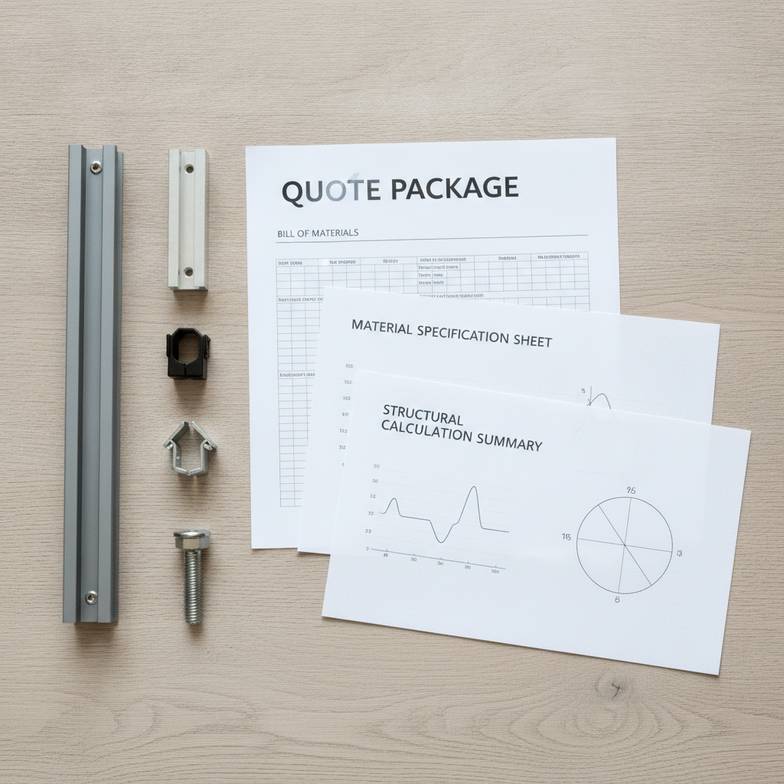
A professional solar mounting system quote is never just a price. It must be supported by a comprehensive document package that includes a detailed Bill of Materials (BOM), clear material specifications, and a preliminary structural calculation summary that proves the design is safe for your project's specific conditions.
Dive Deeper: Your Checklist for Vetting a Quote
Think of the documentation as the evidence that backs up the supplier's claims. Without it, you're buying based on trust alone. When we send a quote, we include a full package of information because we want our customers to know exactly what they are getting. Here is a checklist of the documents you should demand from any potential supplier.
1. Detailed Bill of Materials (BOM)
This is non-negotiable. The BOM should list every single component by part number, description, and quantity. This includes rails, splices, roof attachments, mid clamps, end clamps, bolts, nuts, and grounding hardware. Use this to compare quotes apples-to-apples and ensure nothing is missing.
2. Material Specification Sheet
This document proves the quality of the materials. It should clearly state the alloys and standards for the main components. Look for specifics like:
Rails & Components: Aluminum Alloy AL6005-T5
Fasteners (Bolts, Nuts, Screws): Stainless Steel SUS304 (or A2-70)
Surface Treatment: Clear Anodized, Thickness ≥ 10μm (microns)
If a supplier is hesitant to provide this, they may be using inferior materials.
3. Preliminary Structural Calculations
This is your proof of safety. A reputable supplier will run a preliminary calculation based on your project's location, roof/ground conditions, and module layout. The summary should reference the engineering standards used (e.g., ASCE 7-16 for the US, or Eurocode for Europe) and show the key inputs, such as:
Design Wind Speed (e.g., 140 mph)
Ground Snow Load (e.g., 30 psf)
Exposure Category (B, C, or D)
A quote without this is a blind guess. You need to verify that the proposed system is structurally adequate before you buy it.
4. Preliminary Layout Drawings
A simple drawing showing the proposed rail and footing layout on your roof or ground plot is incredibly helpful. It’s a visual confirmation that the supplier has correctly interpreted your project plans and that the BOM quantities are likely correct. It helps you spot potential issues, like a vent pipe being in the way, before installation begins.
5. Warranty Document
Ask for the official warranty document upfront. Don't just rely on a claim like "12-year warranty" in an email. Read the fine print. The warranty should clearly state the coverage period, what is covered (materials, finish), and the process for making a claim. A solid warranty from an established company provides peace of mind.
How Can Supplier Responsiveness Predict Future Problems?
You've sent technical questions to three suppliers about their solar mounting system quotes. One got back to you within a few hours with detailed answers and diagrams. Another took two days to send a vague, one-sentence reply. The third hasn't responded at all. Is this just a difference in sales culture, or does it mean something more?
A supplier's pre-sale responsiveness is one of the strongest predictors of their post-sale support and overall reliability. Quick, clear, and technically detailed answers demonstrate that they have a competent engineering team, a customer-focused culture, and robust internal processes. Slow or vague responses are a major red flag for future problems.
Dive Deeper: Gauging a Supplier's Competence Through Communication
In my role, I've learned that how a company communicates tells you almost everything you need to know about them. The sales process is your chance to "interview" your potential supplier partner. Pay close attention to how they behave.
The Quality of the Questions They Ask *You*
A great supplier doesn't just answer your questions; they ask their own. When we receive a request for quotation, the first thing we do is clarify the project details. A competent supplier will ask for:
The full project site address (for wind/snow/seismic data).
The roof type and material (e.g., standing seam metal, composite shingle, tile).
The exact solar panel model or at least its dimensions and datasheet.
A preliminary layout drawing or sketch.
If a supplier gives you a price without asking these questions, they are not engineering a solution; they are just selling you parts. Their primary interest is the sale, not the success of your project.
Red Flags in Supplier Communication
As you interact with potential suppliers, watch out for these warning signs. Any one of these is cause for concern; a combination of them should disqualify the supplier immediately.
Vague, Non-Technical Answers: If you ask about the maximum allowable span for their rail and they say, "it's very strong," that's a red flag. The correct answer is, "It depends on your wind and snow loads, but based on your project at [Location], the maximum span is 1.8 meters."
Hesitation to Provide Documents: If they refuse to provide material specs, structural calculations, or a detailed BOM, run away. They are hiding something.
No Access to Technical Staff: Can you speak to an engineer or a product specialist if you have a tough question? If you are only allowed to talk to a salesperson who can't answer technical details, you will have no support when a real problem arises during installation.
High-Pressure Tactics: If a supplier pressures you to make a decision quickly and brushes off your technical questions, they are not a partner. They are a transactional vendor who will be gone the moment there is a problem.
The Post-Sale Support Test
Think about it this way: the pre-sale period is when a supplier is trying their hardest to impress you and win your business. If their communication is poor now, what will it be like six months from now when your crew is on-site with an urgent installation question? The support will almost certainly be worse.
Choosing a responsive, transparent, and technically competent supplier is a critical part of de-risking your project. The small premium you might pay for a system from such a supplier is insurance against much larger costs and delays down the road.
Frequently Asked Questions
What is a reasonable price per watt for a solar mounting system?
This number varies dramatically based on the system type (rooftop vs. ground-mount), material (aluminum vs. steel), project location (high-wind vs. low-wind), and overall quality. Instead of focusing on a specific number, it's far more effective to compare the total installed cost and the completeness of the quotes you receive.
Should I always choose a system with pre-assembled components?
For most projects, yes. The labor savings from pre-assembled parts like clamps and splices almost always outweigh a slightly higher material cost. They reduce installation time, minimize the risk of dropped parts, and simplify work for the crew, leading to a lower total installed cost and a faster project completion time.
What's the difference between AL6005-T5 and AL6063 aluminum?
AL6005-T5 is a medium-strength structural alloy with higher tensile and yield strength than AL6063. This makes it the superior choice for load-bearing solar mounting rails that need to withstand wind and snow loads for decades. AL6063 is more commonly used for architectural applications like window frames where structural strength is less critical.
How important is the warranty for a solar mounting system?
The warranty is crucial. It's your protection against material defects and premature degradation. Look for a warranty of at least 12 years that covers both the structural components and the finish. More importantly, consider the company offering the warranty. A long warranty is useless if the company is no longer in business to honor it.
Conclusion
Choosing a solar mounting system is one of the most critical decisions you'll make for your project's long-term health and safety. The temptation to simply pick the lowest price per watt is strong, but it's a flawed approach that ignores the most important factors. To truly compare solar mounting system quotes, you must dig deeper. By focusing on the total installed cost, demanding a complete package of technical documentation, and evaluating the supplier's expertise and responsiveness, you shift from being a price-shopper to a smart, risk-averse buyer.
Ultimately, comparing quotes is an exercise in risk management. A slightly more expensive quote from a reputable supplier with comprehensive documentation, high-quality materials, and a labor-saving design is almost always the better long-term value. It protects your investment, your reputation, and the safety of the project for decades to come.
If you're ready to receive a transparent, fully-documented quote for your next solar project, we invite you to submit your project details to our team. We'll provide a comprehensive proposal that helps you make a truly informed decision.
For further project planning, read our guides to solar mounting system costs and evaluating solar mounting manufacturers.
Written by
XINVOK Technical Team
Practical solar mounting knowledge for EPC teams, distributors and project buyers.
Project inquiry
Talk to Our Team
Share your project location, module size, mounting type, quantity and customization requirements.