
How to Prepare a Solar Mounting System RFQ: Drawings, Site Data, and Specifications
Feeling ready to source your commercial solar project but worried you'll get back a stack of quotes that are impossible to compare? You're not alone. Sending out a vague request often leads to vague prices, hidden costs, and installation nightmares. The solution is a well-prepared solar mounting system RFQ that arms suppliers with the precise drawings, site data, and specifications they need to give you an accurate, reliable proposal.
To prepare a comprehensive solar mounting system RFQ, you must gather and include three key categories of information: detailed project drawings (site layout, roof plans), specific site data (local wind/snow loads, roof pitch, structural details), and complete equipment specifications (exact PV module dimensions and clamping zones).

That might sound simple enough, but the real value is in the details. Let's break down exactly what information you need in each category and, more importantly, why it’s so critical for your project's success and your peace of mind.
What Are the Absolute Must-Have Drawings for a Solar Mounting System RFQ?
Thinking about skipping the detailed drawings just to get your RFQ out the door faster? I'd urge you to reconsider. Sending an RFQ without a proper site layout is like asking for directions without saying where you're going. It forces suppliers to guess, and their guesses can cost you dearly in material shortages or overages.
For any roof-mounted solar project, the must-have drawings are a roof layout plan showing dimensions, obstructions, and desired array locations, and structural drawings that detail rafter or purlin type, spacing, and material. For ground-mounted systems, a topographical survey is the essential equivalent.
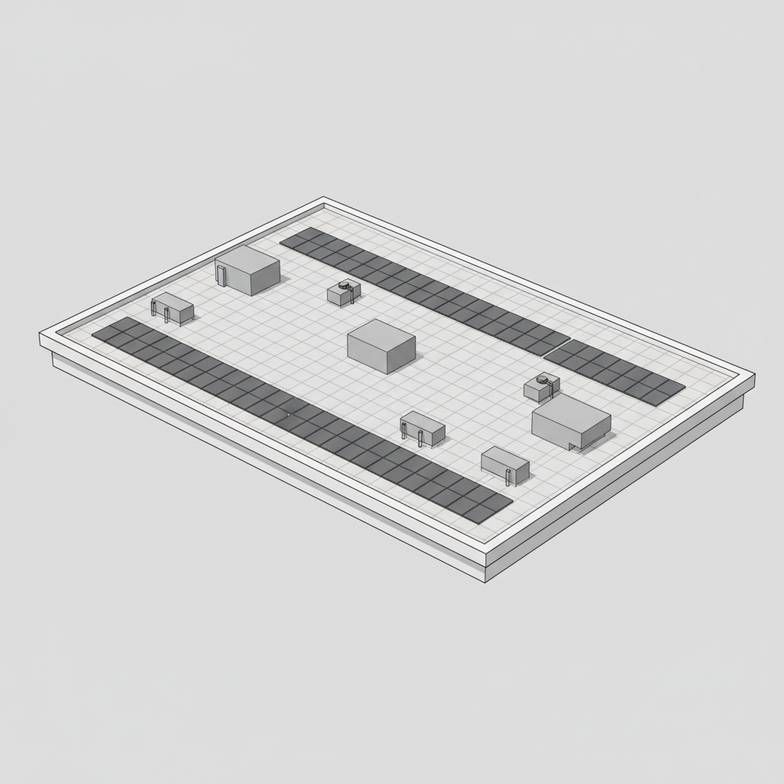
Dive Deeper: The Drawings That Define Your Project
From my experience handling hundreds of inquiries at XINVOK, I can tell you that the quality of the drawings we receive is the single biggest predictor of a smooth project. Vague sketches get vague answers; precise drawings get precise solutions.
The Roof Layout: Your Project's Blueprint
The roof layout is a simple top-down view, but it's the foundation of your Bill of Materials (BOM). It's the map that tells us exactly what to pack for the journey.
Your layout drawing should clearly mark:
Overall Dimensions: The length and width of each roof surface, including ridge-to-eave measurements.
Obstructions: The exact location and size of every single thing on the roof that isn't the roof itself. This includes HVAC units, vents, pipes, skylights, and parapet walls.
Array Placement: The desired location and configuration of the solar arrays. If you know you need service walkways of a certain width, mark those too.
Why it's critical: This drawing directly determines the quantity of mounting rails and the number of rail splices needed. It tells us how to orient the array to avoid shading from an HVAC unit and how many attachments will be needed to span around a skylight. I've seen projects delayed for weeks because they were short a few dozen rails—a problem that a simple layout drawing in the initial solar mounting system RFQ would have prevented entirely.
Structural Plans: The Foundation of Safety
If the layout is the map, the structural plans are the physics homework. They tell us what the building is made of and how strong it is. This is not something you can guess.
Your RFQ needs to include:
Support Structure Details: Are there wood rafters or steel purlins? What are their dimensions (e.g., 2x8 wood, 6" steel C-channel)?
Spacing: What is the on-center spacing of these structural members (e.g., 24 inches on-center)?
Roofing Material: What is the top layer? Is it standing seam metal, trapezoidal R-panel, asphalt shingle, concrete tile, or a membrane?
Why it's critical: This information dictates which roof attachment we can propose. The attachment for a steel purlin is completely different from a wood rafter hook. Choosing the wrong one can lead to leaks, installation failures, or an inability to attach the array at all. Providing these details upfront prevents costly and dangerous on-site modifications.
For Ground Mounts: The Topographical Survey
For ground-mounted projects, a topographical survey and a geotechnical report are your starting documents. These replace the roof plans and tell us about the ground the system will be built on. This includes grade changes, soil type, and the presence of rock or a high water table. This data is essential for selecting the right foundation, whether it's ground screws, helical piles, or a concrete ballast system.
Why Does Site-Specific Data Matter More Than Generic Specs in an RFQ?
It’s tempting to just ask suppliers for a "standard" system that meets local codes, hoping to simplify the process. But here's a hard truth: in structural engineering, there's no such thing as "standard." Local codes are a starting point, not a complete design. Relying on them alone forces suppliers to make risky assumptions, and you are the one who ultimately owns that risk.
Site-specific data like design wind speed (e.g., 140 MPH) and ground snow load (e.g., 30 PSF) from local building codes (like ASCE 7) are non-negotiable inputs. They directly determine the required strength, spacing, and quantity of mounting components needed to prevent structural failure.

Dive Deeper: Turning Raw Data into a Safe Structure
A common question we get is, "Can't you just look up the code for my city?" We can, but you, the project owner, should be the one to specify the design criteria. This ensures everyone is bidding on the same safety standard.
Wind and Snow Loads: The Non-Negotiable Numbers
These numbers aren't opinions; they are legally mandated design parameters from your local building authority, often based on standards like ASCE 7 in the United States.
When a procurement manager sends us a solar mounting system RFQ without these numbers, our engineering team has to stop. We simply cannot calculate the uplift and downward forces the array will experience. These forces determine everything:
The spacing between roof attachments
The span capability of the mounting rails
The type and quantity of clamps required
A system designed for a 90 MPH wind zone in a low-risk area will fail catastrophically in a 150 MPH hurricane-prone region. It's the single most important factor for safety, bankability, and insurability. A project in Miami, dominated by wind uplift, requires a vastly different structure than a project in Lake Tahoe, which is dominated by heavy snow weight.
Critical Details Beyond the Basics
Beyond the headline wind and snow numbers, a few other data points are essential for a truly engineered solution.
Building Height and Risk Category: A tall, isolated building experiences much higher wind forces than a low-rise building surrounded by others. Your building's height and its "Risk Category" (which defines its importance, e.g., a hospital is higher than a storage shed) are required inputs for an accurate wind load calculation.
Roof Pitch: The angle of your roof affects how wind and snow forces are distributed. A steeper roof has different load characteristics than a flat one.
Roofing Condition: An old, 20-year-old roof membrane has different structural considerations than a brand new one. Be honest about the condition, as it can affect the choice of attachment and waterproofing methods.
Omitting these details forces a supplier to assume the "worst case," which can inflate your price, or the "best case," which can put your project at risk.
How Do Module Specifications Impact Your Solar Mounting System RFQ?
So you've selected your solar panels. You might think telling a supplier the brand and wattage is enough, right? Unfortunately, it's not. Two modules with the exact same wattage can have different physical dimensions and, most importantly, different manufacturer-approved mounting zones. Using the wrong clamps or mounting outside these zones can void your panel warranty instantly.
The PV module's official datasheet is essential for a complete solar mounting system RFQ. It provides the exact dimensions (length, width, frame height) needed to select the correct mid and end clamps, and it specifies the manufacturer's required clamping zones, which are critical for structural integrity and warranty compliance.
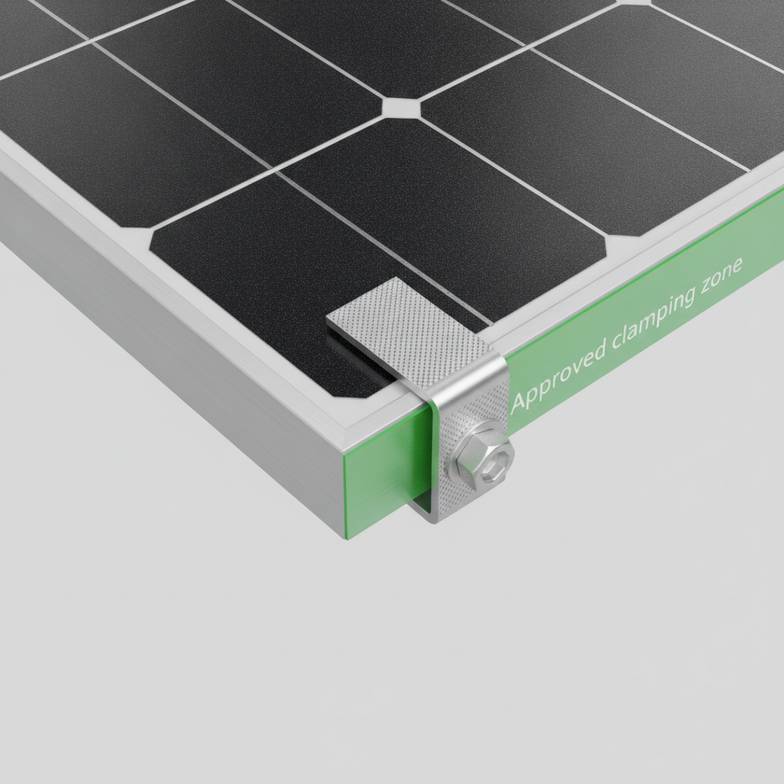
Dive Deeper: Why the Datasheet is Non-Negotiable
Think of the module datasheet as the instruction manual for the most expensive component of your solar array. Ignoring it is a risk you can't afford to take.
Dimensions and Clamp Selection
One of the first things we look for on a datasheet is the module frame height, typically 30mm, 35mm, or 40mm. This single number dictates the clamps we use.
Why it's critical: Our mid-clamps and end-clamps are manufactured to fit a specific frame height precisely. Using a 30mm clamp on a 35mm module frame means the clamp won't engage properly, creating a weak point that could fail under load. We frequently get RFQs asking for "standard clamps." The truth is, the module datasheet defines what "standard" is for your project.
The Critical Importance of Clamping Zones
This is an area where I see many costly mistakes made. The module manufacturer specifies the exact areas on the module frame where you are allowed to place clamps. This is usually shown as a dimensional range on the datasheet diagram (e.g., "Mounting permitted between 150mm and 400mm from the corner").
Why it's critical: Clamping outside these zones puts stress on the glass and frame in ways they were not designed to handle. A heavy snow load or strong wind uplift could cause the module to flex and crack, or even detach from the rails. Worse yet, it almost always voids the module manufacturer's warranty. A mounting supplier has no way of knowing if their rail layout will align with these required zones unless you provide the datasheet.
| RFQ Information Provided | Supplier Action | Project Risk |
|---|---|---|
| Module Brand/Wattage Only | Guesses clamp zones and clamp size | High: Risk of warranty void, structural failure, wrong parts. |
| Full Module Datasheet | Designs rail and attachment layout to match clamp zones | Low: Ensures warranty compliance and structural integrity. |
How Can a Detailed Solar Mounting System RFQ Help You Filter Suppliers?
You’ve sent your RFQ to five suppliers and now have five different prices. How do you possibly know which one is the best value? If you sent a vague RFQ, you're likely comparing apples, oranges, and a few lemons. The lowest price probably came from the supplier who made the most optimistic—and riskiest—assumptions.
A detailed solar mounting system RFQ acts as a technical competency test. A professional supplier will respond with a complete Bill of Materials (BOM), system drawings, and clarifying questions. An unqualified or lazy supplier will likely return a single, vague "price-per-watt" that hides their risks and assumptions.

Dive Deeper: Reading the Tea Leaves of Supplier Responses
Your goal with an RFQ isn't just to get a price; it's to find a competent partner. Here’s what to look for in their proposals.
What a Good Response Looks Like (Green Flags)
A serious supplier will show their work. Look for these positive signs:
A Detailed Bill of Materials (BOM): The response should list every single component and its quantity: X number of 4.2-meter rails, Y rail splices, Z mid-clamps, etc. This is proof they actually engineered a solution for your specific project.
Clarifying Questions: I love it when a supplier comes back with questions. "Can you confirm the rafter spacing on the north-east corner is 24 inches?" or "Our calculations show you're in a high wind zone; we recommend reducing the attachment spacing here. Is that acceptable?" This shows they are actively managing your project's risk.
Preliminary Layout Drawing: A good response often includes a drawing showing how their proposed components fit onto your roof layout.
Clear Exclusions: They will be upfront about what is not included in their price, such as flashing, sealant, or on-site labor.
Red Flags to Watch For in a Quote
An incomplete RFQ invites incomplete answers. Watch out for these warning signs:
A Single "Per-Watt" or "Per-Module" Price: This is the biggest red flag. It means the supplier has not done any project-specific engineering. The final cost will almost certainly be higher once the real requirements are known.
No BOM: If they can't tell you what you're buying, how can you trust they're providing a complete system?
No Questions Asked: A supplier who doesn't ask a single question about a complex commercial project either doesn't understand the risks or simply doesn't care.
Heavy Use of "Standard" or "Typical": Without referencing your specific data, these words are meaningless.
Your goal with a solar mounting system RFQ is to find the supplier who offers the lowest total project risk. The supplier who does their homework upfront is the one who will save you from costly change orders and delays.
Frequently Asked Questions
What if I don't have all the structural drawings for an old building?
If official drawings aren't available, the next best thing is a thorough site inspection. You or a local contractor should measure the rafter/purlin spacing, identify the material (wood/steel) and dimensions, and take clear photos. For complex or critical projects, hiring a local structural engineer to perform an assessment is the safest path.
Can I just use a web-based solar design tool and export the report for my RFQ?
Design tools are a fantastic starting point for a preliminary layout and parts estimate. However, they often use generalized data for loads and may not account for your building's specific structural limitations. Use the tool's output, but always verify the key inputs—wind/snow loads, module clamp zones, and rafter/purlin details—against official datasheets and site measurements.
How much detail is too much in a solar mounting system RFQ?
Honestly, for a technical procurement like this, there is almost no such thing as too much detail. More information empowers good suppliers to give you a more accurate and reliable quote while exposing the unqualified ones. It is far better to provide extra information (like photos of the roof surface and electrical rooms) than to leave out something critical.
Should I include my target budget in the RFQ?
This is a commercial decision, but it can be helpful. Including a budget can help suppliers propose the most cost-effective solution that still meets all your technical requirements. However, you must ensure it doesn't encourage them to cut corners on safety. Your technical specifications, especially wind and snow loads, must always be treated as firm, non-negotiable requirements.
Conclusion
Preparing a thorough solar mounting system RFQ is the single most important step you can take to de-risk your procurement process. It’s not about filling out a form; it's about clearly defining the specific engineering problem you need suppliers to solve. By providing detailed drawings, verified site data, and exact module specifications, you transform the conversation from vague price-per-watt guesswork to a comparison of concrete, verifiable solutions. This disciplined approach allows you to accurately compare proposals, filter out unqualified bidders, and confidently select a partner who truly understands your project's unique challenges. A strong solar mounting system RFQ is your best guarantee that the price you are quoted is the price you will actually pay, saving you from the costly surprises of change orders and installation delays.
When you're ready to move forward, gathering this information is your first step. Submit your complete project details—including drawings, load data, and module datasheets—to our team. We will provide a comprehensive mounting proposal and a transparent, itemized quotation to help you make the best decision for your project.
For further project planning, read our guides to choosing a solar mounting system and comparing solar mounting quotes.
Written by
XINVOK Technical Team
Practical solar mounting knowledge for EPC teams, distributors and project buyers.
Project inquiry
Talk to Our Team
Share your project location, module size, mounting type, quantity and customization requirements.
Related Products
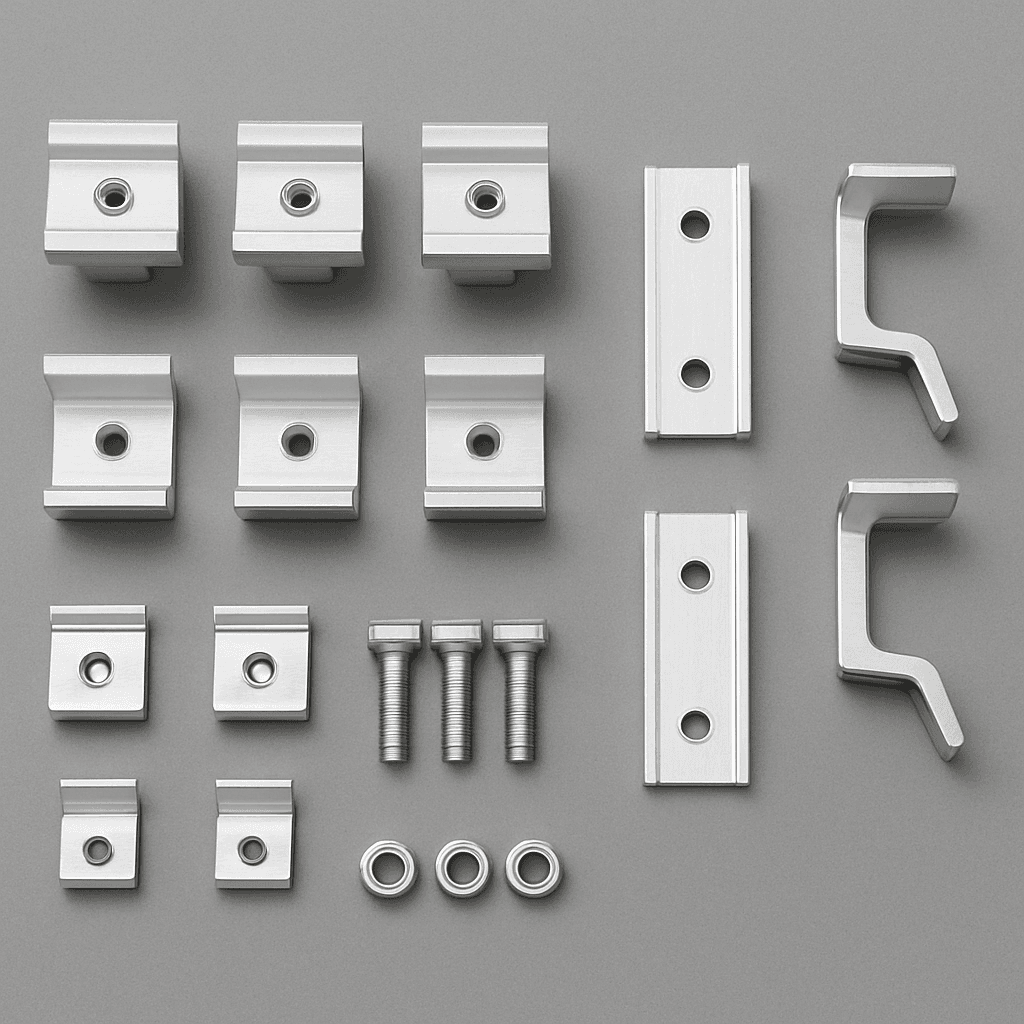
Solar Mounting Accessories
Rails, mid clamps, end clamps, roof hooks, grounding clips, cable clips, bolts and fasteners for roof and ground PV installation.
View products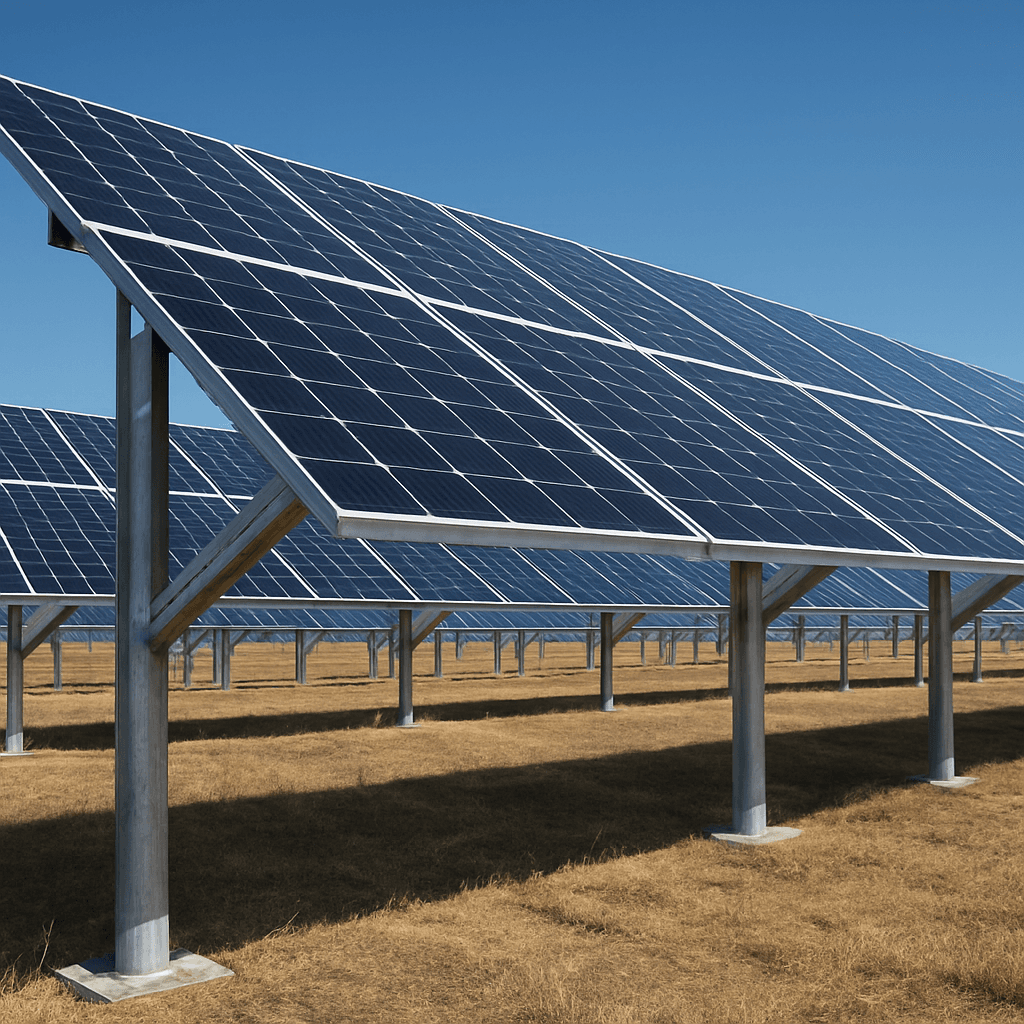
Ground Solar Mounting Systems
Aluminum, pile and galvanized steel ground mounting options for commercial and utility PV projects, selected according to soil condition, foundation method and project layout.
View products
Ground Screws
Galvanized ground screw foundation products for ground solar mounting systems, selected according to soil condition, diameter, length and pull-out requirements.
View products