How to Choose a Solar Mounting System Manufacturer: A Buyer’s Checklist
Struggling to select a supplier for your solar project? Choosing the right solar mounting system manufacturer can feel like a high-stakes decision, and it is. A poor choice can lead to project delays, budget overruns, and even structural failures down the road, putting your reputation and profitability at risk. The solution isn't to find a universally "best" manufacturer, but to find the one that's the best fit for your specific project.
To choose a solar mounting system manufacturer, you must move beyond price and marketing claims. Develop a buyer's checklist focused on four key areas: technical documentation, verifiable manufacturing quality, logistical competence, and responsive communication. Use this checklist to demand specific evidence, such as material certificates, project-specific drawings, and clear packaging plans, to accurately assess a supplier's ability to de-risk your project.

This approach transforms a simple checklist from a scorecard into a powerful communication tool. It helps you define your project needs and systematically evaluate how well a potential supplier can meet them. Let's break down how to build and use this checklist, section by section.
What Technical Documentation Should You Expect from a Solar Mounting System Manufacturer?
Are you worried that a supplier's "engineered solution" is just a generic sales drawing? You should be. A common mistake I see is buyers accepting vague plans. For your project's safety and success, you need proof that the system design is tailored to your specific site conditions.
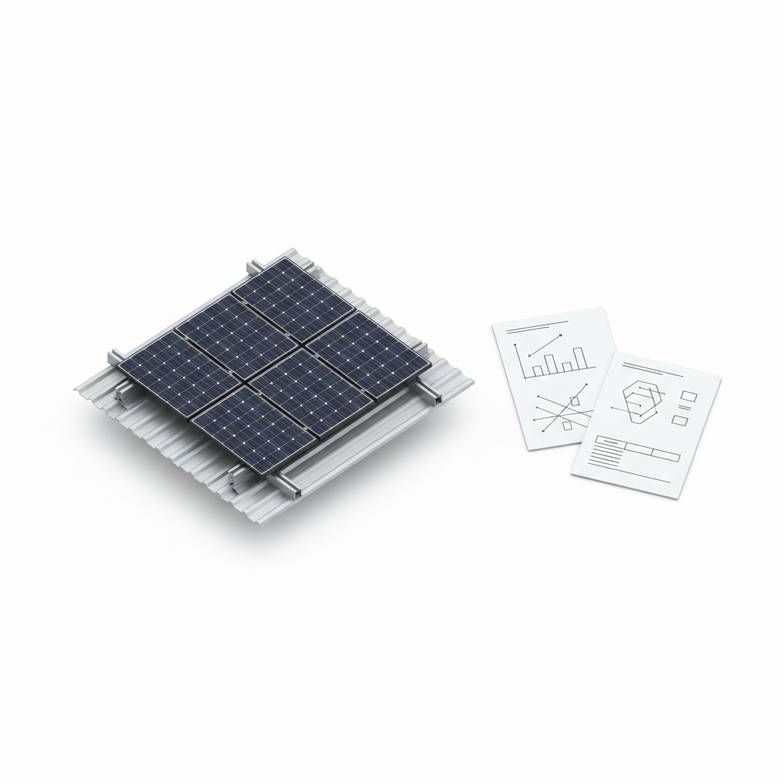
A trustworthy solar mounting system manufacturer will provide a comprehensive document package for your review before you ever place an order. This should include project-specific layout drawings, a detailed bill of materials (BOM), structural calculations for your site's loads, and a clear installation manual.
Dive Deeper: From Claims to Verifiable Designs
The technical documents are your first and best defense against a poorly planned project. They are not just formalities; they are the foundation of your installation. Here’s what to look for.
Beyond the Spec Sheet: Verifying Structural Calculations
A professional manufacturer won't just give you a price. They’ll ask for your project's critical data first. Be ready to provide:
Project Location: For accurate wind, snow, and seismic data.
Site Conditions: For ground-mount, this means soil reports. For rooftops, it's the roof type (metal, tile, flat), structure, and age.
Layout Drawings: A simple sketch or detailed CAD file showing the desired panel arrangement.
Applicable Codes: Mention local building codes or standards like ASCE 7-16 (in the U.S.) or Eurocodes.
The manufacturer's job is to take this data and produce a report showing the system can handle the calculated forces. Don't be shy about asking if their calculations have been reviewed or stamped by a licensed engineer, especially for large commercial projects.
The Bill of Materials (BOM) as a Sanity Check
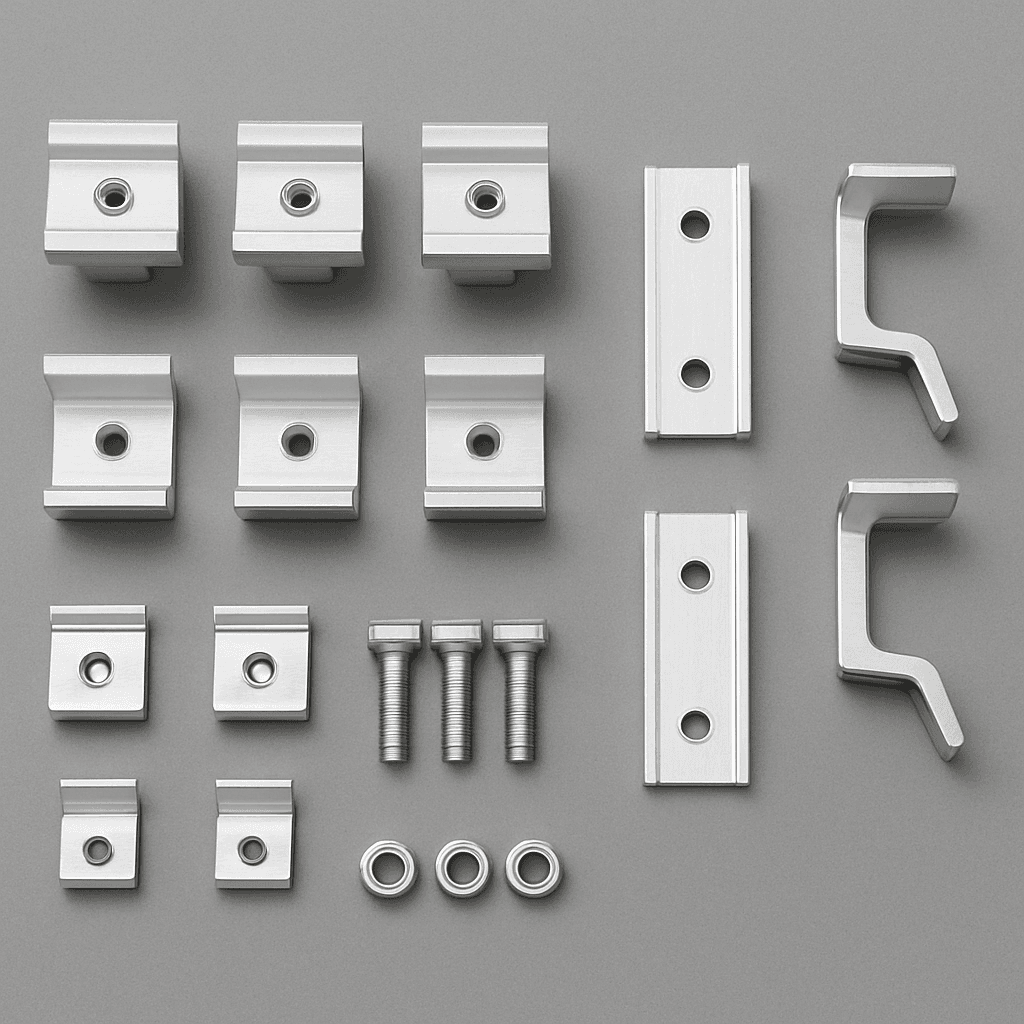
The BOM is a complete list of every single part you will receive. I can't stress this enough: review it carefully. It should list every rail, clamp, bolt, nut, and screw. A common story I hear from frustrated installers is running out of a specific fastener mid-job because the original shipment was short.
When we prepare a proposal, the BOM is matched directly to the drawings. Here's what you should do:
Check for Completeness: Does it include everything needed for assembly? Rails, splices, roof attachments, clamps, grounding lugs, and all fasteners should be listed with part numbers and quantities.
Cross-Reference with Drawings: Spot-check a few locations on the drawing and see if the components in the BOM match up.
Question "Kits": If the BOM lists "Rooftop Kit x 10," ask for a breakdown of what's inside one kit.
A supplier who provides a vague or incomplete BOM is creating a huge risk for your installation schedule.
Installation Manuals: A Window into Usability
A good installation manual tells you a lot about a manufacturer. Is it written in clear English with helpful diagrams? Or is it a confusing, poorly translated document? The quality of the manual often reflects the quality of their post-sales support. A great manual saves your team time on the roof, reduces installation errors, and ultimately lowers your labor costs. If a supplier can't provide a clear, system-specific manual, it’s a major red flag.
How Do You Verify the Manufacturing and Material Quality of a Supplier?
Every supplier's website says they use "high-quality materials" and have "strict quality control." These phrases are meaningless without proof. How do you know their aluminum won't show heavy corrosion after five years, or their steel won't rust?
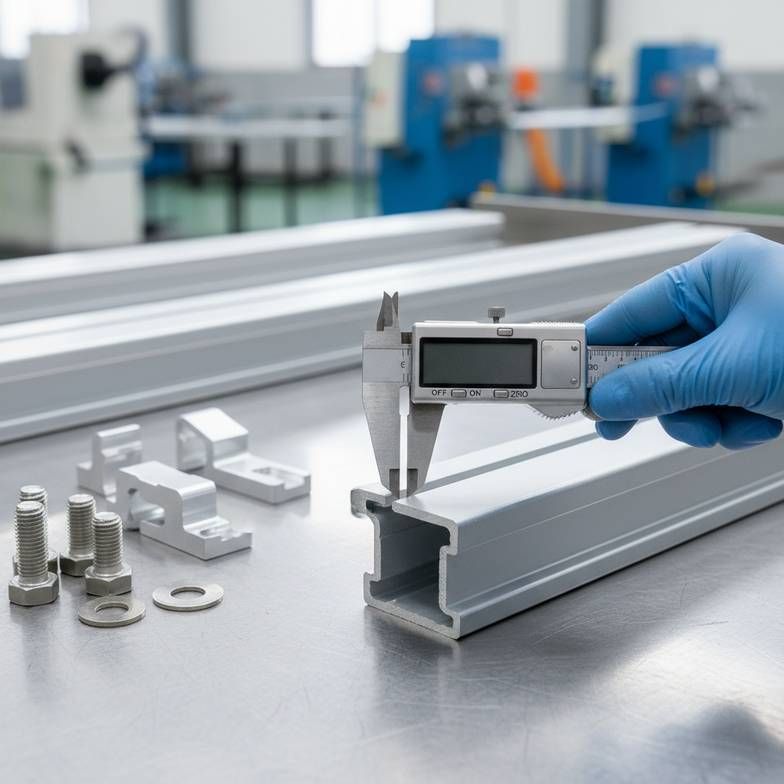
To truly verify quality, you must request specific documents and ask probing questions. Ask for material certificates for the exact alloys and coatings used, third-party test reports (like salt spray tests), and ask them to describe their pre-shipment inspection process.
Dive Deeper: Translating Marketing Words into Hard Evidence
Let's cut through the jargon. Quality is not an abstract concept; it's a series of verifiable specifications and processes.
Deconstructing "High-Quality" Materials
Don't accept generic answers. Ask for the specifics. A knowledgeable solar mounting system manufacturer will be able to provide them instantly.
Aluminum Components (Rails, Clamps): The industry standard for structural profiles is Aluminum Alloy 6005-T5 because of its excellent strength and corrosion resistance. For the protective layer, ask for the anodization thickness. A standard clear anodized finish should be at least 12 microns (μm) to provide durable protection.
Steel Components (Ground Mounts, Fasteners): For galvanized steel, ask for the coating weight, such as Z275 (275 g/m²), or the thickness if it's hot-dip galvanized after fabrication. For fasteners, roof hooks, and clamps used in corrosive coastal or industrial areas, Stainless Steel SUS304 is good, but SUS316 is even better due to its higher resistance to chlorides.
Here is a quick reference table:
| Component | Common Material | Key Specification to Verify | Best For |
|---|---|---|---|
| Mounting Rails | Aluminum Alloy | 6005-T5 or 6061-T6; Anodization >12μm | Most rooftop and ground mount applications |
| Module Clamps | Aluminum Alloy | 6005-T5; Anodized finish | Standard modules and environments |
| Roof Hooks/Bolts | Stainless Steel | SUS304 (standard) or SUS316 (corrosive environments) | Tile roofs, and areas near the coast |
| Ground Mount Legs | Galvanized Steel | Hot-dip galvanized coating >65μm (ASTM A123) | Large-scale ground-mounted projects |
What Do Certifications Really Mean?
Many suppliers will boast about their certifications. Your job is to be skeptical and verify.
ISO 9001: This certifies that the manufacturer has a documented quality management system. It's a good sign of process maturity, but it doesn't guarantee the quality of any single product. Ask for a copy of the certificate and check that it's valid.
TÜV or UL: These certifications are for specific products and test them against safety and performance standards. If a supplier claims a product is "TÜV Certified," ask for the certificate number and the specific product model it applies to. Don't assume it covers their entire product line.
Ask About Their In-House QC Process
This is a simple but revealing question: "Can you walk me through your quality control process before my order ships?" A good supplier should be able to explain their steps, such as:
Raw material inspection.
Dimensional checks during extrusion or fabrication.
Coating thickness verification.
A final pre-shipment inspection where they check quantities against the BOM.
From my experience, a manufacturer who is proud of their QC process will be happy to explain it. Hesitation is a bad sign.
What Logistical and Packaging Questions Should You Ask a Solar Mounting System Manufacturer?
Your perfectly engineered, high-quality mounting system has finally arrived on site. But the components are poorly packaged, small parts are missing, and your crew spends hours just sorting through a jumbled mess. This is a real and costly risk that many buyers overlook.
Before placing an order, you must ask any potential solar mounting system manufacturer detailed questions about their packaging, labeling, and shipping process. Crucially, you also need to know their policy for replacing missing or damaged parts quickly.
Dive Deeper: De-Risking Your Project from the Factory to the Job Site
Logistics isn't boring—it's where projects often succeed or fail. Focusing on this area separates the amateurs from the professional suppliers.
Packaging for On-Site Efficiency
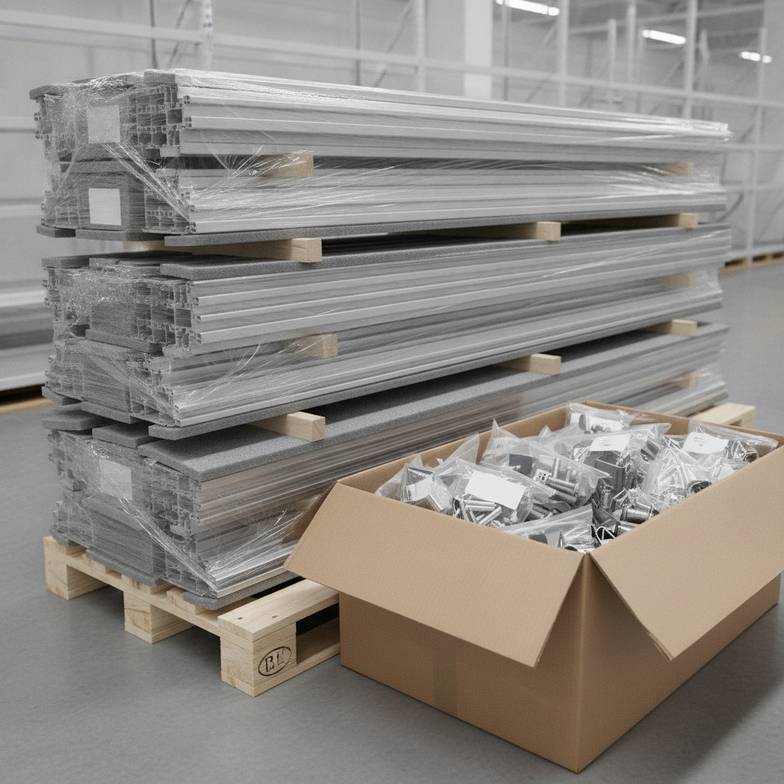
How components are packaged directly impacts your installation speed. Based on direct feedback from installers, small improvements in packaging can save hours on the roof. Ask your supplier:
Are small components pre-assembled? For example, are module clamps pre-assembled with their bolt and nut? This is a huge time-saver.
How are small fasteners packed? Are they thrown loosely in a large box or are they bagged and labeled by type and quantity?
How are long rails protected? Are they bundled with protective material between them to prevent scratches and damage during transit?
A supplier who has thought through these details understands what happens on a real job site.
The Critical Importance of Clear Labeling
For any project larger than a small residential system, clear labeling is non-negotiable. I once had a distributor tell me his team wasted an entire day sorting an unmarked shipment from a different supplier. That's a direct hit to the project's bottom line.
Every box, bundle, or pallet should have a clear label that includes:
Project Name or PO Number
Part Number and Description
Quantity
This simple step prevents chaos during unloading and staging, especially on large sites with multiple delivery points.
The "What If" Scenario: Your Missing Parts Policy
This might be the most important question you ask. "What is your exact process if we discover a missing or damaged component during installation, and what is the typical turnaround time to get a replacement to our job site?"
The answer will tell you everything about their commitment to customer support. A professional solar mounting system manufacturer will have a clear, documented procedure. They should be able to tell you who to contact and how quickly they can ship a replacement. A vague or hesitant answer like "that doesn't happen" or "we'll look into it" is a massive red flag. Problems happen; it's how a supplier responds that defines them.
Frequently Asked Questions
What's more important: price or quality?
Quality and reliability should always be the priority. A rock-bottom price often hides risks like inferior materials, incomplete kits, or non-existent support. These issues almost always lead to higher total project costs due to installation delays, rework, and potential long-term failures. Focus on finding the best overall value, not just the lowest initial price.
Should I choose a local or an overseas solar mounting system manufacturer?
Both can be great options. A local supplier might offer faster lead times and simpler logistics, while an overseas solar mounting system manufacturer like us can often provide significant cost advantages due to scale. The key is to evaluate both using the same rigorous checklist. For overseas suppliers, pay extra attention to communication clarity, quality verification processes, and shipping logistics.
How do I know if a mounting system is compatible with my solar panels?
You must provide the manufacturer with the solar panel's official datasheet. They need to check two things: the physical dimensions of the module and, more importantly, the approved clamping zones specified in the panel's installation manual. The mounting system clamps must secure the panel frame within these designated areas to avoid voiding the panel warranty.
What is the typical lead time for a custom solar mounting order?
Lead times can vary widely, from 2 to 6 weeks or more, depending on the manufacturer's production schedule, the complexity of your order, and shipping distances. A standard rooftop system might be faster than a large, custom-engineered ground mount. Always ask for a project-specific lead time when you request your quotation.
Conclusion
Choosing the right solar mounting system manufacturer is fundamentally an exercise in risk management. The generic advice to "check for quality and service" is not enough. You need a structured approach. By building a buyer's checklist focused on verifiable evidence—technical documents, material certificates, logistical plans, and communication responsiveness—you shift the power into your hands. This process forces a supplier to prove their competence rather than just state it. Don't be swayed by glossy brochures or low prices; demand proof and hold your partners to a high standard.
At XINVOK, we welcome this level of scrutiny because we believe an informed buyer becomes a long-term partner. If you're planning a solar project and want to work with a supplier who provides clear, verifiable answers, we encourage you to submit your project details. We’ll provide a transparent proposal and a detailed quotation to help you make the best, lowest-risk decision for your business.
For further project planning, read our guides to preparing a solar mounting RFQ and comparing solar mounting quotes.
Written by
XINVOK Technical Team
Practical solar mounting knowledge for EPC teams, distributors and project buyers.
Project inquiry
Talk to Our Team
Share your project location, module size, mounting type, quantity and customization requirements.