
When Do Solar Projects Need Concrete Foundations?
Planning a ground-mounted solar project and finding yourself stuck on the foundation? It's a common hurdle. Making the wrong choice can lead to project delays, budget overruns, or even long-term instability. Understanding when concrete foundations are the right call is the first step toward a secure and cost-effective solar installation.
In short, solar projects need concrete foundations when site conditions are challenging. This typically includes projects on sites with poor soil (like loose sand, soft clay, or a high water table), in areas with very high wind or snow loads, or where local regulations demand maximum stability against forces like frost heave. While more expensive and time-consuming upfront, concrete offers the highest level of pull-out resistance and long-term security.
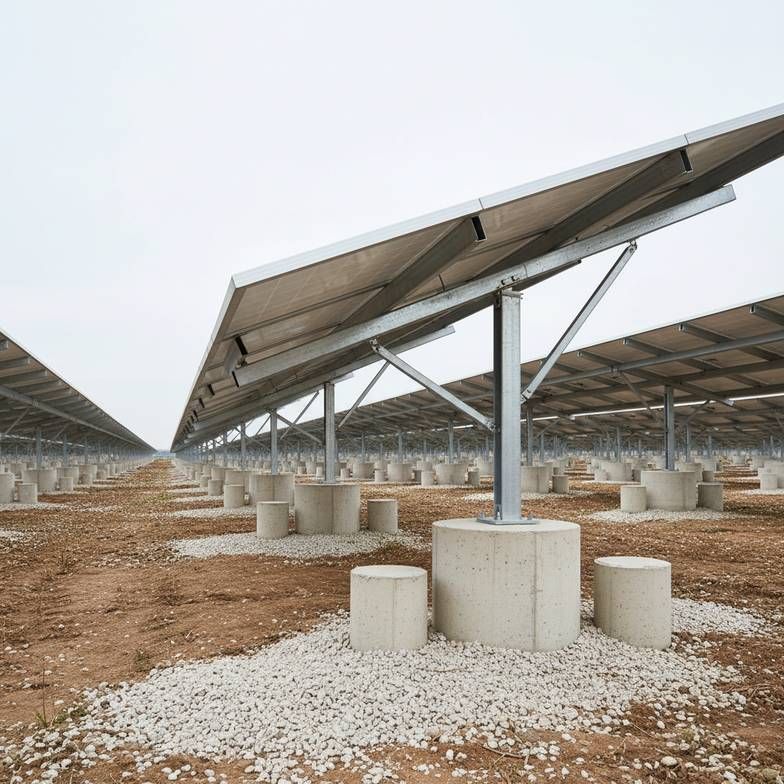
Now, the decision isn't a simple yes or no. It's a technical trade-off. Let's dive deeper into the specific factors that push a project toward concrete and explore the other options available so you can make a truly informed choice.
How Do Soil Conditions Dictate Foundation Choice?
You’ve got a promising site for your solar project, but you're not sure if the ground itself can support a standard foundation. Ignoring the soil is one of the biggest risks you can take, potentially leading to system failure years down the road. The professional way to solve this puzzle is by starting with a geotechnical report.
Soil conditions are the number one factor in foundation design. In our experience, when a customer's site has loose, sandy, or soft clay soils, these ground types often lack the frictional holding power needed for driven piles or ground screws. In these scenarios, concrete foundations become the safest and most reliable option.
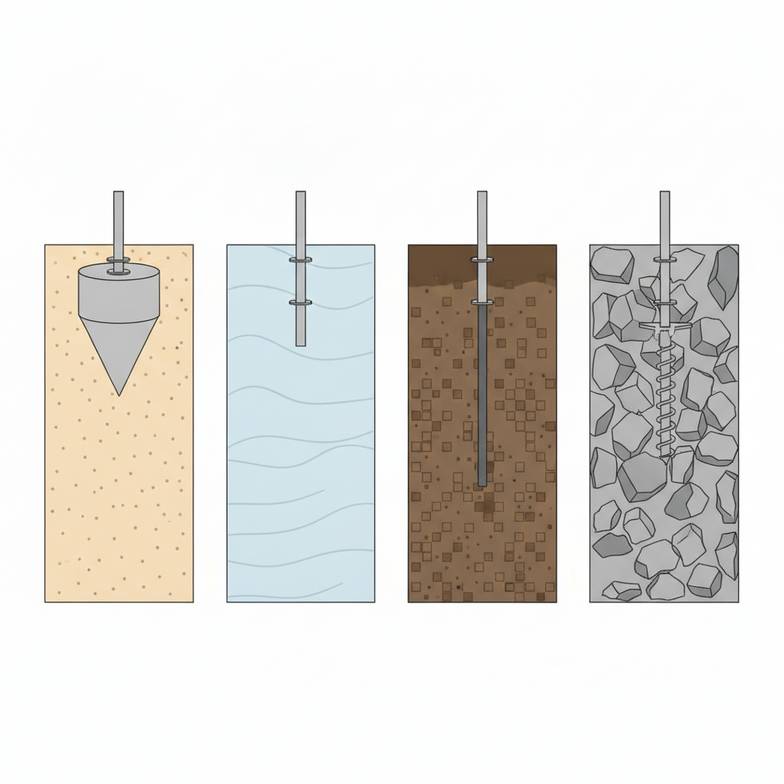
A geotechnical report is the key document that unlocks this part of your project plan. It’s prepared by a specialized engineer who analyzes soil samples from your site. Think of it as a doctor's report for your land. It gives us, the mounting supplier, the critical data needed to recommend a foundation system that won't fail.
When Soil Says "Yes" to Concrete
I often get requests for a quick quote without any site data. But without a geo-report, it's just a guess. That report tells us several things that might point directly to using concrete foundations:
Low Soil Bearing Capacity: Some soils, like uncompacted fill, peat, or soft clays, are just not very strong. They can't support the concentrated load from a driven pile. A concrete pier or footing spreads that same load over a much wider area, reducing the pressure on the weak soil and preventing the foundation from sinking over time.
High Water Table or Saturated Soils: When soil is full of water, the friction between the soil particles and a pile or screw drops significantly. This dramatically reduces the "pull-out resistance" needed to fight wind uplift. Concrete's sheer weight and mass provide a gravity-based solution that doesn't rely on soil friction alone.
Expansive or Frost-Prone Soils: In some climates, the ground freezes and thaws, causing the soil to heave upwards. In other areas, clay soils expand and shrink dramatically with moisture changes. Both can slowly push foundations out of the ground. Concrete foundations solve this by being drilled or poured to a depth below the frost line or the layer of expansive soil, anchoring the system in stable ground.
When Other Options Might Work
Of course, concrete isn't always the answer. If your geotechnical report comes back with good news, you may have more cost-effective options.
Driven Piles are fantastic in dense, cohesive soils without large rocks. The ground grips the pile tightly, providing excellent resistance.
Ground Screws work best in soils that are firm but not overly rocky. They are incredibly fast to install but rely entirely on the soil's shear strength to hold them in place.
Here's a simple table to illustrate the trade-offs:
| Foundation Type | Ideal Soil Condition | Challenging Soil Condition |
|---|---|---|
| Concrete Foundations | Works in almost all soils | The go-to solution for poor soils (sand, soft clay) |
| Driven Piles | Dense, cohesive soils, consistent profile | Rocky ground, soft/loose soils, high water table |
| Ground Screws | Medium-dense soils, free of large rocks | Very soft soils, bedrock, ground with many cobbles |
| Ballasted Systems | Any (ground is only for support) | Sloped or highly uneven ground |
Do High Wind and Snow Loads Require Concrete Foundations?
Your project site is in a coastal region known for hurricanes or a northern climate that gets heavy snowfall. You can't just hope for the best; underestimating these natural forces can lead to panel uplift, racking damage, or even a complete system collapse. Understanding how these loads impact your foundation is crucial for protecting your investment.
Yes, high wind and snow loads often drive the decision toward more robust foundations. In these high-load scenarios, concrete foundations frequently become the necessary choice because they provide superior mass and engineering flexibility to counteract the immense uplift forces from wind and the heavy downward pressure from snow.
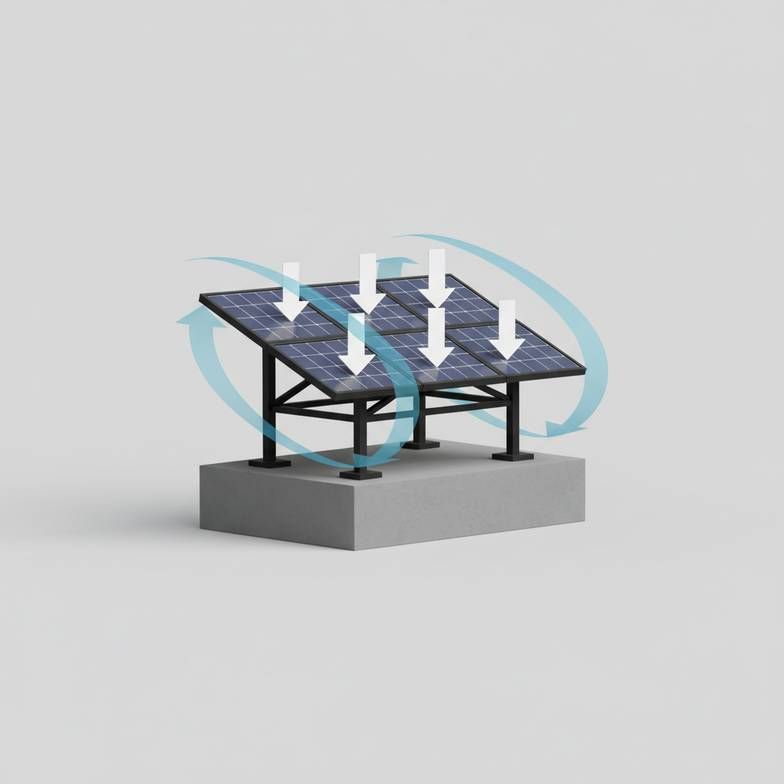
When we prepare a proposal for a project, we’re not just looking at the racking. We’re looking at the entire system, and the foundation is what connects it to the planet. The forces acting on the solar array have to be safely transferred into the ground.
Understanding Uplift Force
A solar array acts like a big wing or a sail. As wind flows over and under it, it creates a pressure differential, resulting in a powerful lifting force—we call this "uplift." In a high-wind event, this force can be enormous, literally trying to pull the entire array out of the ground.
The foundation's job is to resist this force with a combination of its own weight (mass) and its grip on the soil (friction and cohesion). A structural engineer calculates the maximum potential uplift based on:
Design Wind Speed: Based on local building codes and historical weather data (e.g., ASCE 7-16 in the US).
Exposure Category: Is the site wide open or sheltered by buildings?
Array Tilt and Height: A steeper tilt can catch more wind.
Safety Factors: Engineering codes require the foundation's resistance to be significantly higher than the calculated load.
In many high-wind zones, the math simply shows that driven piles or ground screws cannot provide enough pull-out resistance to meet the safety factor. I remember quoting a project in Florida where the wind speed requirement was 160 mph. The only viable option was a deep, reinforced concrete foundation to provide the necessary anchoring.
The Heavy Weight of Snow
While wind tries to lift the array, snow does the opposite—it pushes it down with immense weight. This is known as a "dead load." A heavy, wet snowfall can add thousands of pounds of force to your structure.
The foundation must be able to bear this weight without sinking. Furthermore, snow doesn't always melt evenly. Unbalanced snow loads can create torque and stress on the racking structure, which is then transferred down to the foundations. Concrete foundations distribute these heavy, and sometimes uneven, loads effectively into the ground.
Are There Viable Alternatives to Concrete Foundations?
You've seen the bill for concrete and the project timeline for pouring it, and you're wondering if there's a better way. Committing to concrete can feel like a slow, expensive path, and you might be leaving faster, more cost-effective options on the table if your site is suitable. So, let’s look at the main alternatives and see where they shine.
Absolutely. Driven piles, ground screws, and ballasted systems are all common and viable alternatives to concrete foundations. The key is that each has specific advantages in cost, speed, and ideal site conditions. The right choice for your project depends entirely on that geotechnical report and your load requirements.
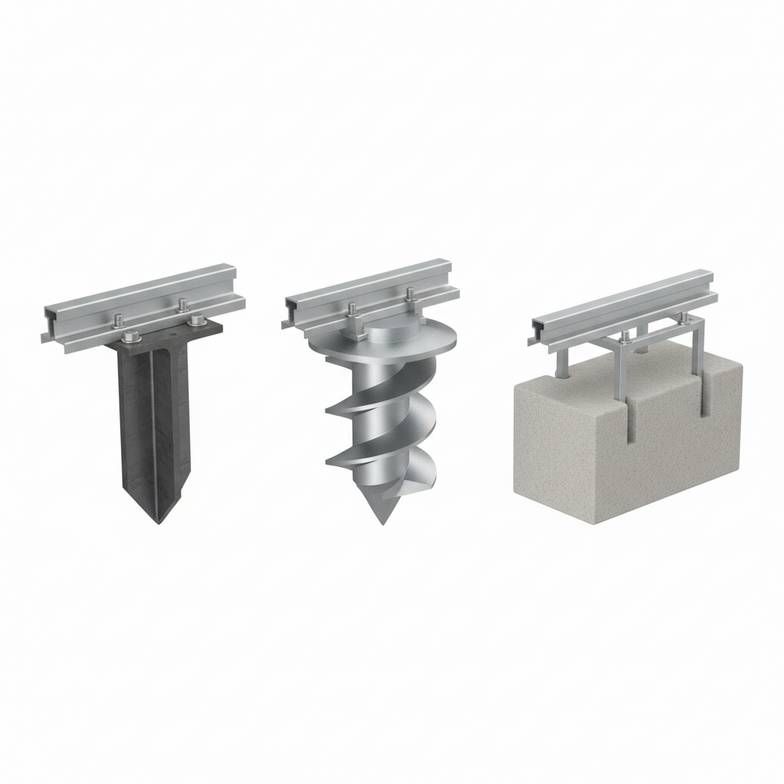
In our role as a mounting supplier, we help customers evaluate these trade-offs all the time. The goal isn't to push one solution but to find the most efficient and reliable one for the specific site. Here’s a breakdown of the main contenders.
Driven Piles (The Utility-Scale Favorite)
Driven piles are typically steel I-beams or C-channels that are hammered directly into the ground with a large vibratory or impact hammer. For large, multi-megawatt solar farms on suitable land, this is often the go-to method.
Pros: Very fast installation per post, especially at scale. They are generally the most cost-effective solution for large projects with good soil. There’s no waiting for concrete to cure.
Cons: Requires heavy, specialized equipment. The process is noisy and creates significant vibration. They are completely unsuitable for rocky ground ("refusal") or very soft soils where they can't achieve the required friction.
Ground Screws (The Speed Demon)
Ground screws, or helical piles, look like giant screws that are drilled into the earth using a hydraulic drive head, often mounted on an excavator or skid steer.
Pros: Extremely fast installation with minimal site disturbance and no excavation. They can be loaded immediately after installation. Many designs are easily adjustable for height, making them great for uneven terrain.
Cons: The material cost per foundation is often higher than a driven pile. They struggle mightily in ground with large rocks, cobbles, or solid bedrock. In weaker soils, their pull-out capacity is less than a comparably sized concrete foundation.
Ballasted Systems (The No-Penetration Solution)
A ballasted system doesn't penetrate the ground at all. Instead, the racking structure is weighed down with heavy materials, usually pre-cast concrete blocks or trays that are filled with gravel or concrete on-site.
Pros: Perfect for sites where ground penetration is forbidden, such as landfills with sensitive caps, brownfields, or some historical sites. Installation can be quick if the ground is level.
Cons: The cost of the ballast blocks and transporting them can be very high. The system requires a large, flat surface. The immense weight can be an issue, and a slip sheet is often needed to protect underlying membranes.
Frequently Asked Questions
How much do concrete foundations for solar cost?
The cost varies widely based on project location, local labor rates, the price of ready-mix concrete, and the specific engineering requirements. Deeper or wider piers needed for poor soil or high loads will cost more. It's often the most expensive option upfront, but it can be the cheapest long-term solution if it prevents a costly failure.
Can I pour concrete foundations myself for a solar project?
For a small, personal DIY project, perhaps. For any commercial, industrial, or utility-scale project, you should absolutely not do it yourself. The foundation design must be specified and stamped by a licensed structural engineer, and the installation must be done by qualified contractors to ensure it meets all safety and code requirements.
What is a pull-out test and why is it important?
A pull-out test is an on-site quality control measure. A test pile or ground screw is installed in a representative location and then pulled vertically out of the ground with a calibrated hydraulic jack. This measures the actual resistance force. This data is used to verify that the foundation performance meets or exceeds the minimum pull-out resistance specified in the engineering design.
Does frost heave affect concrete foundations?
Yes, it can if they are not installed correctly. In climates with freezing temperatures, concrete foundations must be poured to a depth below the local frost line. This anchors the base of the foundation in stable soil that does not move during freeze-thaw cycles, preventing the foundation from being pushed upward over time.
Conclusion
The decision to use concrete foundations for a solar project is not a matter of preference; it's a technical conclusion based on a risk assessment. The choice is driven by hard data from a geotechnical report, load calculations derived from local building codes, and the overall scale of the project. Concrete is the industry's ultimate problem-solver for challenging sites with poor soil, extreme weather, or significant frost heave risk, providing unmatched long-term stability where other methods fall short.
Ultimately, the most important question isn't "Do I need concrete?" but rather, "What specific site data do I need to get an accurate foundation design?" By focusing on gathering the right information first, you enable your engineering and supply partners to recommend the most reliable and cost-effective solution.
If you have your site's geotechnical report, layout drawings, and local load requirements, you are ready for the next step. Submit your project details to us, and our team at XINVOK can help you evaluate the right solar mounting and foundation approach to ensure a secure, bankable, and long-lasting investment.
Written by
XINVOK Technical Team
Practical solar mounting knowledge for EPC teams, distributors and project buyers.
Project inquiry
Talk to Our Team
Share your project location, module size, mounting type, quantity and customization requirements.
Related Products
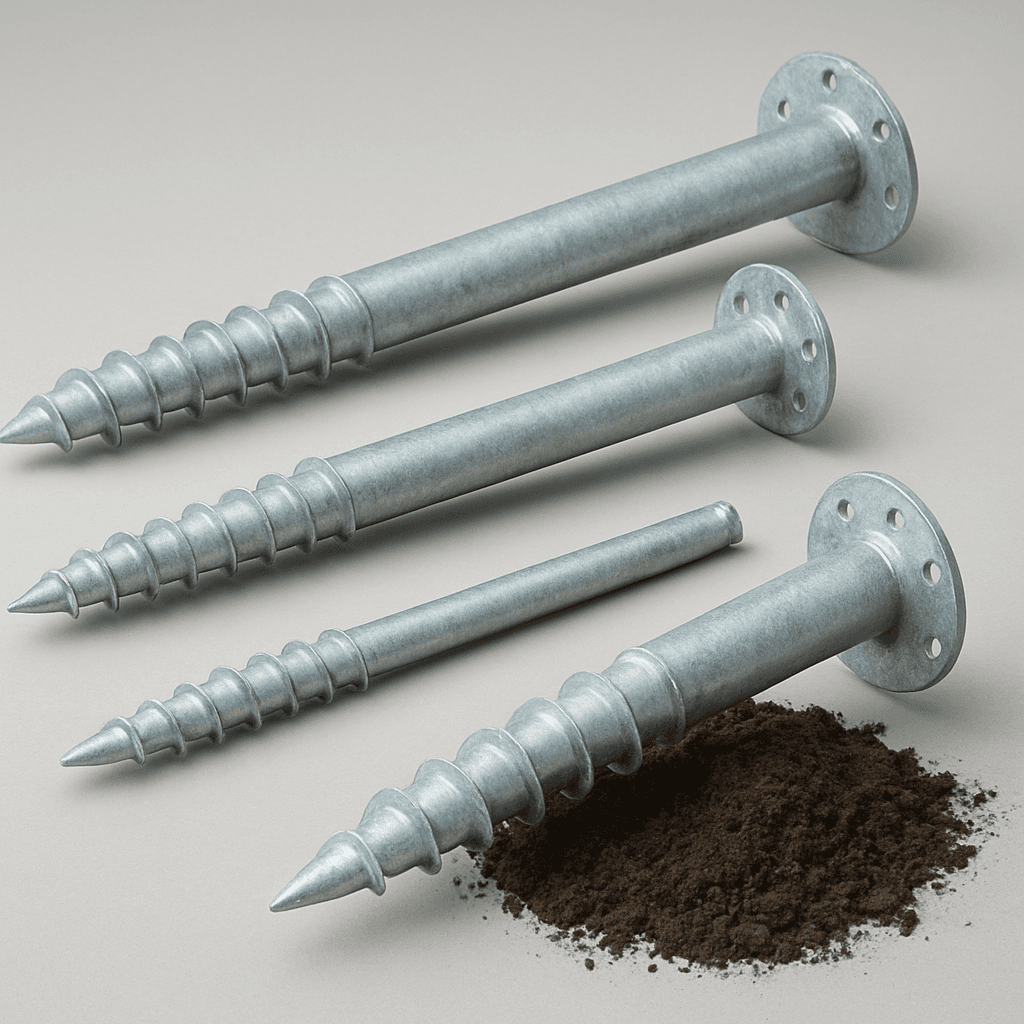
Ground Screws
Galvanized ground screw foundation products for ground solar mounting systems, selected according to soil condition, diameter, length and pull-out requirements.
View products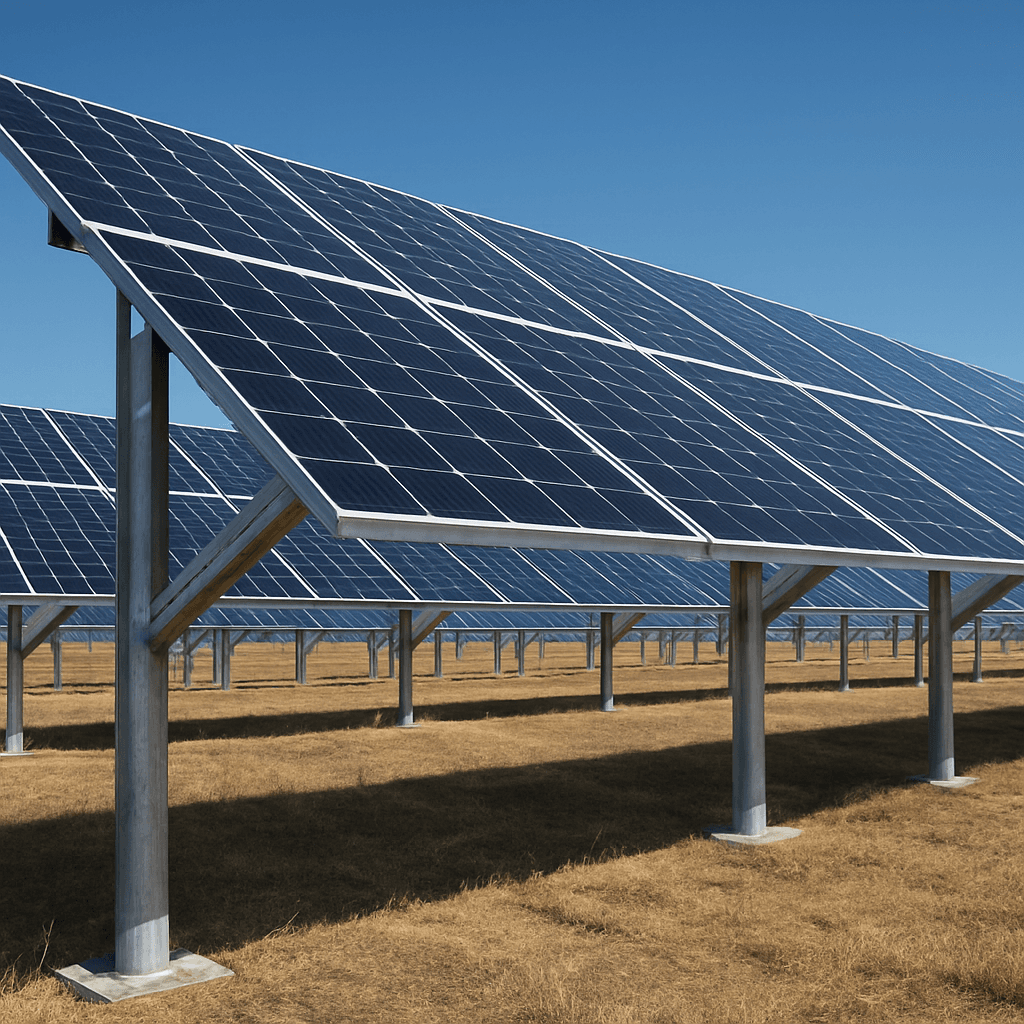
Ground Solar Mounting Systems
Aluminum, pile and galvanized steel ground mounting options for commercial and utility PV projects, selected according to soil condition, foundation method and project layout.
View products